Introduction
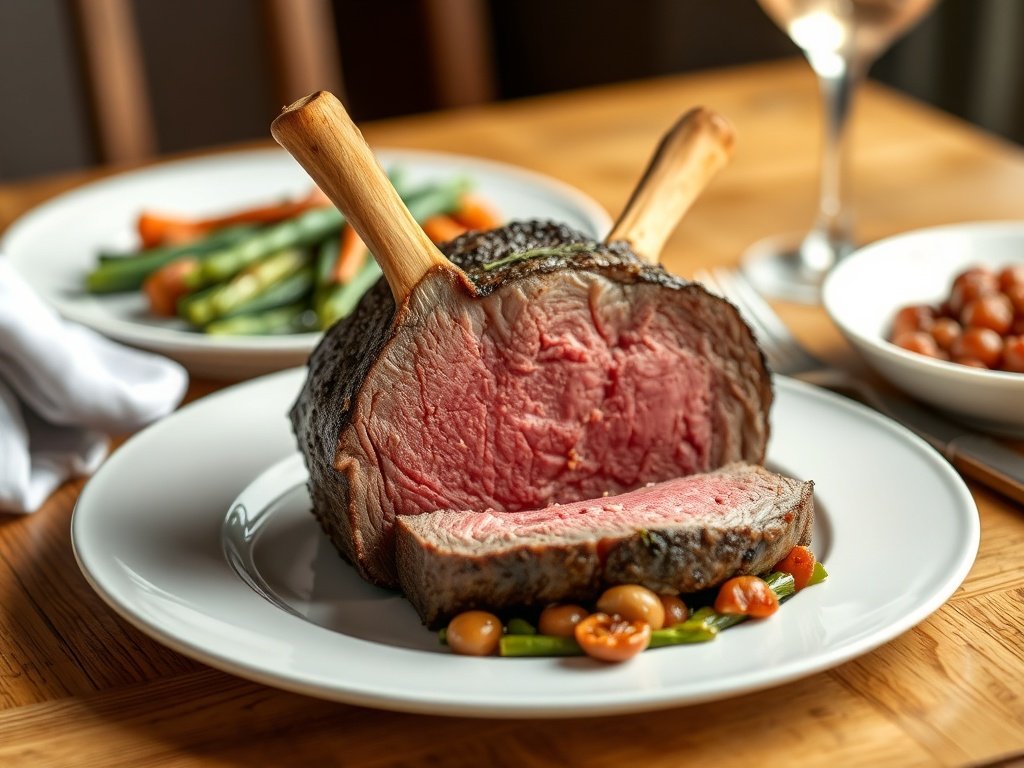
Imagine a culinary masterpiece gracing your holiday table – a magnificent roast, glistening with a perfectly crusted exterior, its savory aroma filling every corner of your home. As you slice into it, the knife glides effortlessly through tender, rosy meat, revealing a succulent interior that promises an unforgettable dining experience. This, my friends, is the magic of a perfectly cooked prime rib roast, the undisputed king of celebratory meals.
Prime rib isn’t just a dish; it’s an event. It embodies tradition, luxury, and the joy of gathering with loved ones. Whether it’s Christmas dinner, a special anniversary, or simply a desire to elevate an ordinary weekend into something extraordinary, prime rib delivers a show-stopping centerpiece that never fails to impress. Its rich, beefy flavor and melt-in-your-mouth texture set it apart, making it a highly anticipated highlight of any feast.
While the thought of preparing such a grand roast might seem daunting, I promise you that achieving a “perfect” prime rib is absolutely within your reach. With the right guidance, a few key techniques, and a little patience, you’ll be carving up a masterpiece that will earn you rave reviews. This article will walk you through every essential step, from selecting the finest cut to mastering the art of the reverse sear, ensuring your prime rib is juicy, tender, and boasts that coveted crispy crust every single time.
Nutritional Information
Per serving (approximate values for a 6oz serving of cooked prime rib):
- Calories: 450
- Protein: 45g
- Carbohydrates: 0g
- Fat: 30g
- Fiber: 0g
- Sodium: 350mg
Ingredients
- 1 (4-6 lb) bone-in or boneless prime rib roast (2-3 ribs)
- 2 tablespoons coarse kosher salt or sea salt
- 1 tablespoon freshly cracked black pepper
- 1 tablespoon garlic powder
- 1 tablespoon onion powder
- 1 tablespoon dried rosemary, crushed
- 1 tablespoon dried thyme
- 2 tablespoons Dijon mustard (optional, for a binder)
- 1 tablespoon olive oil (optional, if not using Dijon)
Instructions
- Choose Your Roast Wisely: Select a high-quality prime rib, ideally USDA Choice or Prime, from a reputable butcher. For a 4-6 lb roast, aim for 2-3 ribs. Decide between bone-in (more flavor, longer cooking) or boneless (easier carving).
- Bring to Room Temperature: This is a crucial step for even cooking. Remove the prime rib from the refrigerator 2-4 hours before you plan to cook it. Place it on a wire rack set inside a baking sheet, uncovered, to allow air circulation.
- Prepare the Roast: Pat the entire roast thoroughly dry with paper towels. This is essential for achieving a crispy crust. If desired, score the fat cap in a crosshatch pattern (about 1/4 to 1/2 inch deep), being careful not to cut into the meat. This helps render the fat and allows seasoning to penetrate.
- Apply the Rub: In a small bowl, combine the coarse kosher salt, black pepper, garlic powder, onion powder, dried rosemary, and dried thyme. If using, spread a thin layer of Dijon mustard evenly over all surfaces of the roast. Alternatively, you can lightly coat the roast with olive oil to help the rub adhere. Generously apply the herb and spice rub to all sides of the prime rib, pressing it gently to ensure it sticks.
- Preheat Your Oven (Low and Slow): Preheat your oven to a low temperature, ideally 250°F (120°C). This low temperature is key to the reverse sear method, promoting even cooking and minimizing the gray band often associated with high-heat roasting.
- Insert Meat Thermometer: Place the prime rib, fat-side up, on a V-rack inside a sturdy roasting pan. Insert a leave-in probe meat thermometer into the thickest part of the roast, avoiding bone. This is your most important tool for success.
- First Roast (Low Temperature): Transfer the roasting pan to the preheated 250°F (120°C) oven. Roast for approximately 2-3 hours, or until the internal temperature reaches about 115-120°F (46-49°C) for rare, or 120-125°F (49-52°C) for medium-rare. Cooking times will vary significantly based on the size and shape of your roast, so rely on the thermometer, not the clock.
- Rest Before the Sear: Once the desired internal temperature is reached, remove the prime rib from the oven. Tent it loosely with foil and let it rest on the counter for 30-45 minutes. This allows the internal temperature to equalize and prevents overcooking during the final sear.
- Preheat Your Oven (High Heat for Searing): While the roast is resting, increase your oven temperature to a very high heat, 450-500°F (230-260°C).
- The High-Heat Finish (Searing): Remove the foil from the rested prime rib. Return the roast to the screaming hot oven. Roast for 10-15 minutes, or until a beautiful, deeply browned and crispy crust has formed. Keep a close eye on it to prevent burning.
- Final Rest: Once the crust is to your liking, remove the prime rib from the oven. Transfer it to a clean cutting board with a juice groove. Tent it loosely with foil again and let it rest for a minimum of 15-30 minutes. This critical resting period allows the juices to redistribute throughout the meat, ensuring a tender and succulent result. During this time, the internal temperature will continue to rise by 5-10°F due to carryover cooking.
- Carve and Serve: If you have a bone-in roast, carefully separate the meat from the bones by running a sharp knife along the bone line. Then, slice the prime rib against the grain into desired thickness (about 1/2 to 3/4 inch is ideal). Arrange the slices on a warm platter and serve immediately with your favorite accompaniments.
Cooking Tips and Variations
Don’t Skip the Room Temperature Step: Starting with a cold roast means the outside will cook faster than the inside, leading to an unevenly cooked result with a wider gray band. Giving it 2-4 hours on the counter allows for more uniform cooking.
Pat It Dry, Seriously: Moisture on the surface of the meat will steam rather than sear. A thoroughly dry surface is the secret to that coveted crispy crust.
Invest in a Good Meat Thermometer: This is non-negotiable for prime rib success. A leave-in probe thermometer is ideal, as it allows you to monitor the internal temperature without opening the oven door repeatedly. Don’t guess; measure!
Master the Reverse Sear: While traditional high-heat initial searing has its merits, the reverse sear method (low heat first, then high heat for crust) consistently delivers a more evenly cooked interior with a beautiful edge-to-edge pinkness and a delicious crust.
Resting is King: After all your hard work, don’t rush this final step. Resting allows the muscle fibers to relax and reabsorb the juices that have been pushed to the center during cooking. Cutting too soon will result in a dry roast and a puddle of juices on your cutting board.
Consider a Dry Brine: For an even juicier and more flavorful roast with an exceptionally crispy crust, consider dry brining. Sprinkle the entire roast generously with coarse salt (about 1/2 teaspoon per pound) 24-48 hours in advance. Place it uncovered on a wire rack in the refrigerator. The salt draws out moisture, then reabsorbs it, seasoning the meat deeply and helping to dry the surface for a better sear.
Enhance Your Rub: Feel free to experiment with your rub. While the basic salt, pepper, garlic, and herbs are classic, you can add a touch of smoked paprika for depth, a pinch of cayenne for subtle heat, or even finely grated lemon zest for brightness.
Dijon Mustard Magic: Spreading a thin layer of Dijon mustard before applying the rub acts as a fantastic binder, ensuring the seasonings adhere beautifully. It also adds a subtle tang and helps with crust formation.
Save Those Bones (If Bone-In): Don’t discard the bones! They are packed with flavor and can be used to make an incredible beef stock or a rich, savory soup.
Don’t Overcrowd the Pan: Ensure your prime rib has plenty of space in the roasting pan. Overcrowding can lead to steaming rather than roasting, hindering crust development.
Make a Simple Au Jus: After removing the roast, pour off any excess fat from the pan drippings, leaving just a tablespoon or two. Deglaze the pan with a splash of red wine or beef broth, scraping up all the flavorful bits from the bottom. Simmer briefly, strain, and serve alongside the prime rib.
Horseradish Sauce is a Must: A creamy, tangy horseradish sauce is the perfect counterpoint to the rich prime rib. Mix prepared horseradish with sour cream or crème fraîche, a squeeze of lemon juice, a pinch of salt, and freshly ground black pepper.
Storage and Reheating
Storage: Allow any leftover prime rib to cool completely before storing. Once cool, slice any remaining large pieces into individual serving sizes or leave as a small roast. Store in an airtight container in the refrigerator for up to 3-4 days. For longer storage, prime rib freezes beautifully. Slice it before freezing, as this allows for quicker thawing and more even reheating. Wrap individual slices tightly in plastic wrap, then in aluminum foil, and place in a freezer-safe bag or container. It can be frozen for up to 2-3 months.
Reheating: Reheating prime rib can be tricky, as the goal is to warm it through without drying it out or overcooking it. The best method is low and slow. Place slices or smaller pieces of prime rib in a baking dish. Add a splash of beef broth or water to the bottom of the dish to create some steam. Cover the dish tightly with foil. Reheat in a preheated oven at 250-300°F (120-150°C) until just warmed through, about 15-25 minutes depending on the thickness. Avoid using a microwave, as it can make the meat tough and rubbery.
Frequently Asked Questions
What if my prime rib is overcooked or undercooked?
The key to preventing this is a reliable meat thermometer. If your roast is undercooked, you can gently return it to a low oven (around 250°F / 120°C) until it reaches the desired internal temperature. If it’s overcooked, unfortunately, there’s no way to reverse it. This is why a thermometer is so crucial – it takes the guesswork out of cooking and helps you hit that perfect doneness every time. Always aim for the lower end of your desired temperature range, as carryover cooking will increase it after resting.
My crust isn’t crispy, what went wrong?
A few factors contribute to a crispy crust. First, ensure you thoroughly pat the roast dry with paper towels before applying any seasoning. Any surface moisture will steam rather than sear. Second, make sure your oven is at a very high temperature (450-500°F / 230-260°C) for the final searing step, and that it has fully preheated. Don’t shortchange the searing time; 10-15 minutes is usually needed. Scoring the fat cap can also help render fat and promote crispiness.
Can I make prime rib without a meat thermometer?
While it is possible, it is strongly advised against. Cooking a prime rib without a meat thermometer is like navigating a ship without a compass – you might get lucky, but the chances of hitting your desired doneness are slim. Prime rib is an expensive cut of meat, and a good quality meat thermometer is a small investment that guarantees perfect results. If you absolutely must proceed without one, you can use very rough time estimates (e.g., 15-20 minutes per pound at 250°F), but be aware that this is highly inaccurate and can lead to an overcooked or undercooked roast.
What are some good side dishes to serve with prime rib?
Classic accompaniments pair beautifully with the richness of prime rib. Creamy mashed potatoes or garlic mashed potatoes are always a hit. Roasted vegetables like asparagus, Brussels sprouts, or green beans add freshness and color. A traditional Yorkshire pudding is a fantastic pairing, as it’s designed to soak up the delicious pan drippings. Don’t forget a tangy horseradish sauce and a simple au jus made from the pan drippings to complete the meal.
