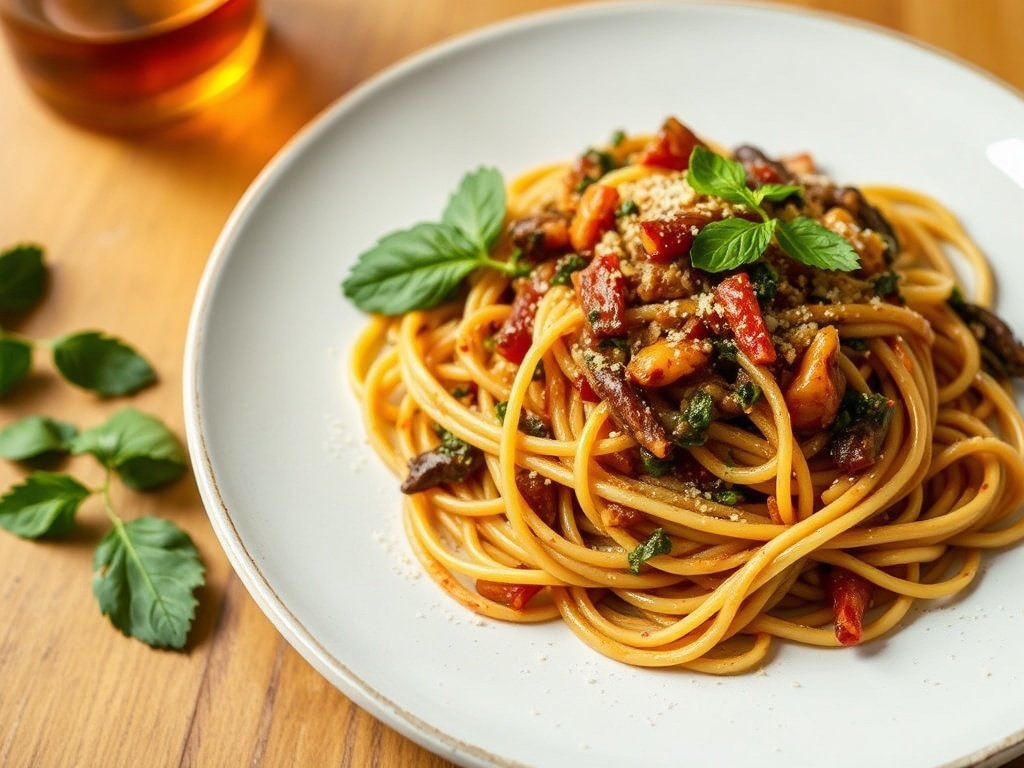
Italian Drunken Noodles: A Hearty & Flavorful One-Pan Meal
Introduction
Picture this: it’s the end of a long day, your stomach is rumbling, and the thought of dirtying multiple pots and pans for dinner is enough to make you reach for the takeout menu. What if we told you there’s a dish that delivers on comfort, flavor, and minimal cleanup, all in one glorious pan? Enter Italian Drunken Noodles, a culinary creation that’s about to become your new weeknight hero. This isn’t just another pasta dish; it’s a vibrant fusion, taking the best of hearty Italian flavors and giving them a playful, “drunken” twist that’s both exotic and wonderfully familiar. Get ready to banish dinner dilemmas and embrace a solution that’s both delicious and surprisingly easy.
Italian Drunken Noodles are a symphony of aromatic savory notes, a hint of spice, and a rich, luscious sauce that coats every strand of pasta. The “drunken” aspect comes from the generous pour of red wine, which deglazes the pan and infuses the sauce with incredible depth and acidity as it cooks down. Imagine tender pasta, perfectly cooked al dente, mingling with savory Italian sausage, sweet crushed tomatoes, pungent garlic, and a whisper of red pepper flakes for that irresistible kick. It’s comfort food at its finest, a dish that feels special enough for a weekend meal but is effortlessly achievable even on the busiest of Tuesdays. This creative fusion marries the soulful warmth of Italian cooking with the spirited kick often found in Asian-inspired “drunken” dishes, creating a truly unique and unforgettable experience.
This dish is designed for those who crave maximum flavor with minimum fuss. The one-pan approach means less time scrubbing and more time savoring. It’s hearty and satisfying, making it perfect for feeding a hungry crowd or enjoying cozy leftovers. Whether you’re a seasoned chef or a kitchen novice, the straightforward steps ensure impressive results every time. Plus, it’s incredibly versatile, allowing for easy customizations to suit any palate or pantry. Prepare to fall in love with a dish that’s not only delicious but also a testament to how creative and comforting fusion cuisine can be.
Nutritional Information
Per serving (approximate values):
- Calories: 650-700
- Protein: 30-35g
- Carbohydrates: 60-65g
- Fat: 30-35g
- Fiber: 6-8g
- Sodium: 900-1100mg
Ingredients
- For the Protein:
- 1 tablespoon olive oil
- 1 pound ground Italian sausage (hot or mild, casings removed if links)
- For the Aromatics & Vegetables:
- 1 large yellow onion, diced
- 4-5 cloves garlic, minced
- 1/2 teaspoon red pepper flakes (or more, to taste)
- For the Liquids & Sauce Base:
- 1/2 cup dry red wine (e.g., Merlot, Cabernet Sauvignon, Chianti)
- 1 (28 ounce) can crushed tomatoes
- 3 cups chicken broth or vegetable broth
- 1 teaspoon dried oregano
- 1/2 teaspoon dried basil
- 1/4 teaspoon black pepper
- Salt to taste
- For the Pasta:
- 12 ounces wide, flat pasta (such as pappardelle, fettuccine, or wide egg noodles)
- For Finishing & Garnish:
- 1/2 cup grated Parmesan cheese, plus more for serving
- 1/4 cup fresh basil leaves, chopped (for garnish)
Instructions
- Heat 1 tablespoon of olive oil in a large, deep skillet or Dutch oven over medium-high heat. Add the ground Italian sausage, breaking it up with a spoon. Cook until thoroughly browned and crumbled, about 5-7 minutes. Once cooked, drain any excess fat from the pan, leaving a small amount for flavor.
- Add the diced yellow onion to the skillet with the cooked sausage. Sauté for 5-7 minutes, stirring occasionally, until the onion softens and becomes translucent.
- Stir in the minced garlic and red pepper flakes. Cook for another 1-2 minutes until fragrant, being careful not to burn the garlic.
- Pour in the dry red wine. Bring to a simmer, scraping the bottom of the pan with a wooden spoon to deglaze and release any browned bits. Let the wine simmer for 2-3 minutes, allowing the alcohol to cook off and the liquid to reduce slightly, intensifying the flavor.
- Stir in the crushed tomatoes, chicken or vegetable broth, dried oregano, dried basil, and black pepper. Bring the mixture to a gentle simmer. Taste the sauce and season with salt as needed, keeping in mind that the sausage and broth may already contain salt.
- Once the sauce is simmering, add the wide pasta directly to the skillet. Ensure the pasta is mostly submerged in the liquid. If needed, add a little more broth or water to cover the pasta.
- Reduce the heat to medium-low, cover the skillet, and cook for 10-15 minutes, or until the pasta is al dente. Stir occasionally to prevent the pasta from sticking and to ensure even cooking. The pasta will continue to absorb the liquid and cook in the sauce, infusing it with incredible flavor. It’s crucial to check the pasta for doneness regularly to avoid overcooking; it should still have a slight bite.
- Once the pasta is cooked al dente and most of the liquid has been absorbed, remove the skillet from the heat. Stir in 1/2 cup of grated Parmesan cheese until melted and well combined, creating a creamy finish.
- Serve immediately, garnished generously with fresh chopped basil and extra grated Parmesan cheese, and an additional sprinkle of red pepper flakes if desired for more heat.
Cooking Tips and Variations
Achieving the perfect Italian Drunken Noodles is all about a few key techniques and knowing how to adapt the recipe to your taste. First and foremost, resist the urge to overcook your pasta. Since it finishes cooking directly in the sauce, it will continue to absorb liquid and tenderize. Aim for a firm al dente texture when you pull it from the heat, as it will soften slightly as it sits. The quality of your ingredients truly shines here; a good dry red wine will add significant depth, and high-quality crushed tomatoes will make a noticeable difference in the sauce’s richness. Don’t skip the crucial step of deglazing the pan with wine after browning the sausage; those browned bits are packed with flavor that will elevate your entire dish. Always taste and adjust your seasonings throughout the cooking process – a pinch more salt, a dash more pepper, or an extra sprinkle of red pepper flakes can transform the final product.
This recipe is wonderfully forgiving and easy to customize. For protein variations, swap the Italian sausage for ground beef, ground turkey, or even plant-based crumbles for a vegetarian option. If you’re using a leaner meat, you might want to add a bit more olive oil at the beginning. To boost the vegetable content, consider stirring in a handful of fresh spinach during the last few minutes of cooking, or sautéing diced bell peppers, mushrooms, or zucchini along with the onions. For those who prefer more heat, increase the red pepper flakes or add a finely chopped fresh chili pepper. If you prefer to avoid alcohol, you can substitute the red wine with an equal amount of beef broth or even a good quality non-alcoholic red wine, though the flavor profile will be slightly different. Experiment with different cheeses for serving; Pecorino Romano offers a sharper, saltier kick, while a sprinkle of fresh mozzarella can add a lovely melty texture. For an “extra drunken” twist, a small splash of brandy added with the wine can introduce another layer of complexity. Finally, for a completely vegan or vegetarian version, use plant-based sausage, vegetable broth, and omit the Parmesan or use a dairy-free alternative.
Storage and Reheating
Storage and reheating are straightforward, making this dish excellent for meal prep or enjoying leftovers. Once cooled, transfer any leftover Italian Drunken Noodles to an airtight container. It will keep well in the refrigerator for up to 3-4 days. While technically you can freeze pasta dishes, the texture of the pasta can become a bit mushy upon thawing and reheating, especially wide noodles. If you do choose to freeze, ensure it’s in a freezer-safe container for up to 2-3 months, but be prepared for a slightly softer pasta texture.
To reheat, the best method is gently on the stovetop. Add the desired portion to a skillet with a splash of chicken broth or water (about 1-2 tablespoons per serving) to help rehydrate the sauce. Heat over medium-low, stirring occasionally, until warmed through. This helps prevent the pasta from drying out and keeps the sauce luscious. If reheating in the microwave, place the noodles in a microwave-safe dish, add a small splash of broth or water, cover loosely, and heat in 1-2 minute intervals, stirring in between, until hot. Be careful not to overheat, as this can dry out the pasta and sauce.
Frequently Asked Questions
What kind of pasta works best for Italian Drunken Noodles?
Wide, flat pasta varieties are ideal for this dish because they mimic traditional Asian drunken noodles and are excellent at soaking up the rich, flavorful sauce. Pappardelle, fettuccine, or wide egg noodles are perfect choices. Their broad surface area allows them to be beautifully coated by the sauce, ensuring every bite is packed with flavor. While other shapes like penne or rigatoni can work, they won’t provide the same authentic “drunken noodle” experience.
Do I have to use red wine, or can I substitute it?
The red wine is a key component of the “drunken” aspect, adding significant depth, acidity, and complexity to the sauce as its alcohol cooks off. A dry red wine like Merlot, Cabernet Sauvignon, or Chianti is recommended. However, if you prefer to avoid alcohol, you can substitute it with an equal amount of beef broth or vegetable broth. While the flavor profile will be slightly different and less complex, it will still result in a delicious and hearty pasta dish. You could also explore non-alcoholic red wines designed for cooking.
Can I make this dish vegetarian or vegan?
Absolutely! This recipe is highly adaptable for vegetarian and vegan diets. For a vegetarian version, simply swap the Italian sausage for a plant-based ground crumble or finely diced mushrooms, and use vegetable broth instead of chicken broth. For a vegan version, in addition to those substitutions, omit the Parmesan cheese or use a high-quality dairy-free Parmesan alternative. You’ll still achieve a rich, flavorful, and satisfying meal with these adjustments.
How do I prevent the pasta from getting mushy?
The key to perfectly cooked pasta in this one-pan dish is to cook it slightly less than the package directions when you first add it to the sauce. It will continue to absorb liquid and cook to al dente perfection within the sauce. Stir the pasta occasionally to prevent it from sticking to the bottom of the pan and to ensure even cooking. Once the pasta is al dente and the sauce has thickened, remove it from the heat immediately. Overcooking is the main culprit for mushy pasta, so keep a close eye on it during the final cooking stage.
