Introduction
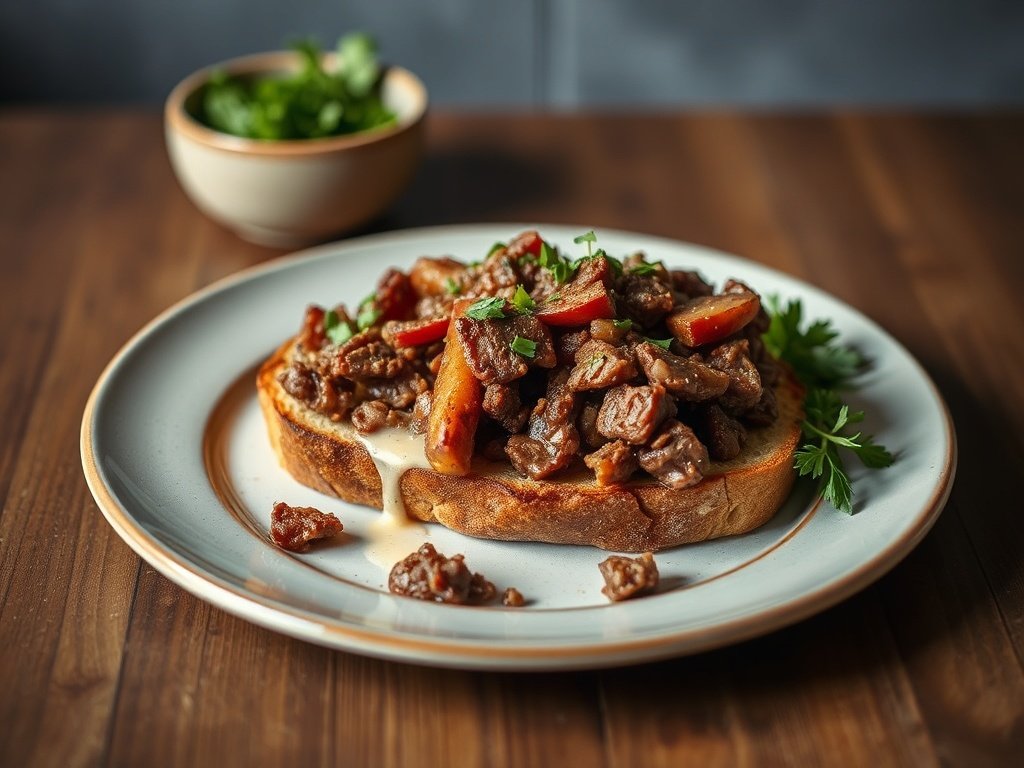
There are some dishes that just speak to the soul, wrapping you in a warm embrace of flavor and memory. Creamed Chipped Beef on Toast is undeniably one of them. For many, it’s more than just a meal; it’s a culinary time capsule, evoking images of bustling diners, hearty military mess halls, or quiet childhood breakfasts. This beloved comfort food classic, with its rich, savory cream sauce embracing tender, salty dried beef, all piled high on perfectly toasted bread, holds a special place in the pantheon of American comfort cuisine. It’s the kind of dish that promises satisfaction, a comforting warmth that starts in your stomach and spreads throughout your entire being.
Often known by its more colorful, albeit less formal, nickname “S.O.S.” (Stew on a Shingle or, more colloquially, Shit on a Shingle), this dish has transcended its humble military origins to become a cherished staple in homes and diners across the nation. Its enduring popularity lies in its deceptive simplicity and profound ability to deliver deeply satisfying flavors. What might seem like a straightforward combination of ingredients transforms into a masterpiece of texture and taste – the crispness of the toast providing a delightful contrast to the velvety, savory cream sauce and the unique chew of the chipped beef. It’s a dish that proves that sometimes, the simplest ingredients, when handled with care, can create the most extraordinary culinary experiences.
Whether you’re rekindling cherished memories or discovering this iconic dish for the very first time, this foolproof recipe will guide you through every step to recreate the magic of Creamed Chipped Beef on Toast. Prepare to delight your taste buds with a dish that is surprisingly easy to make, yet profoundly comforting and utterly delicious. Get ready to experience why this savory breakfast or brunch has remained a timeless favorite for generations, offering a perfect blend of history, heartiness, and unparalleled flavor.
Nutritional Information
Per serving (approximate values, based on 1/2 cup creamed beef over 1 slice white toast):
- Calories: 325 kcal
- Protein: 16g
- Carbohydrates: 25g
- Fat: 15g
- Fiber: 1g
- Sodium: 1210mg
Ingredients
Yields: 4 servings
- 4 tablespoons unsalted butter
- 4 tablespoons all-purpose flour
- 2 cups whole milk (or 2% milk for a slightly lighter sauce)
- 4 ounces thinly sliced dried beef, often found in jars or vacuum-sealed packages (such as Buddig or similar brands)
- 1/2 teaspoon freshly cracked black pepper, plus more to taste
- Pinch of freshly grated nutmeg (optional, but highly recommended)
- 8 slices of your favorite bread, toasted (white sandwich bread is traditional)
- Fresh parsley, chopped, for garnish (optional)
Instructions
- Prepare the Dried Beef: If your dried beef comes in larger pieces, tear or chop it into bite-sized strips or shreds. Some brands are very salty; if you are sensitive to salt, you can lightly rinse the beef under cold water and pat it dry with paper towels. Set aside.
- Make the Roux: In a medium saucepan or skillet, melt the unsalted butter over medium heat. Once the butter is fully melted and shimmering, add the all-purpose flour. Whisk constantly for 1 to 2 minutes, creating a smooth paste known as a roux. This step is crucial for cooking out the raw flour taste and ensuring a smooth sauce. The roux should be pale yellow and smell slightly nutty, not browned.
- Create the Béchamel Sauce: Gradually pour the milk into the roux, a little at a time, while continuously whisking. Start with a small amount of milk to create a very thick paste, then slowly add more, whisking vigorously after each addition to prevent lumps. Continue whisking until all the milk has been incorporated and the sauce begins to thicken and smooth out. Bring the sauce to a gentle simmer over medium-low heat, continuing to whisk occasionally, and cook for 5-7 minutes, or until the sauce is thick enough to coat the back of a spoon.
- Incorporate the Chipped Beef: Reduce the heat to low. Add the prepared dried beef to the béchamel sauce. Stir gently to combine, ensuring the beef is fully coated and warmed through.
- Season the Sauce: Add the freshly cracked black pepper and the optional pinch of freshly grated nutmeg to the creamed beef mixture. Stir well. Taste the sauce before adding any additional salt, as the dried beef is inherently quite salty. Adjust seasoning if necessary, keeping in mind the saltiness from the beef.
- Prepare the Toast: While the creamed chipped beef is simmering, toast your bread slices to your desired level of crispness. White sandwich bread is traditional, but feel free to use sourdough, rye, or even brioche for a richer base.
- Serve: To serve, place two slices of hot toast on each plate. Generously spoon the warm creamed chipped beef mixture over the toast. If desired, garnish with fresh chopped parsley for a touch of color and freshness. Serve immediately and enjoy this comforting classic.
Cooking Tips and Variations
Mastering Creamed Chipped Beef on Toast is all about understanding its core components and knowing how to adapt them to your taste. This dish, often affectionately known as “S.O.S.” (Stew on a Shingle or Shit on a Shingle), gained prominence in the U.S. military from World War I onwards due to the shelf-stable nature of dried beef, making it a reliable and hearty meal for soldiers. Its transition from military rations to a beloved home and diner classic speaks volumes about its enduring appeal. Here are some tips and variations to ensure your dish is always a success and to help you explore new dimensions of this classic comfort food.
Achieving a Perfectly Smooth Béchamel
The béchamel sauce is the heart of this dish, and a smooth, lump-free sauce is key. The secret lies in the roux and the gradual addition of milk. When making your roux, cook the butter and flour for at least 1-2 minutes over medium heat. This not only cooks out the raw flour taste but also ensures the flour is fully hydrated, which helps prevent lumps. When adding the milk, pour it in slowly, whisking continuously and vigorously. Start with a small amount to create a thick paste, then gradually incorporate the rest, allowing the sauce to thicken slightly before adding more. If you do end up with a few small lumps, don’t despair; you can often whisk them out by increasing your vigor, or for a truly silky sauce, pass it through a fine-mesh sieve before adding the beef.
Managing the Saltiness of Dried Beef
Dried beef is inherently salty, and this is a defining characteristic of the dish. However, some brands can be excessively salty for modern palates. Always taste your creamed beef sauce *before* adding any extra salt. If you find your dried beef too salty, a common technique is to lightly rinse the beef under cold running water and pat it dry with paper towels before adding it to the sauce. Some even advocate for a brief soak in water, though this can slightly alter the texture. Experiment to find your preferred level of salinity. Remember, you can always add salt, but you can’t easily take it away.
Choosing Your Base: Beyond Traditional Toast
While white toast is the quintessential “shingle” for this dish, don’t be afraid to experiment with other bases. Hearty sourdough bread offers a wonderful tang and chewy texture that stands up well to the rich sauce. Rye bread can add a complex, slightly earthy flavor, while brioche provides a touch of sweetness and richness. For an even more comforting and substantial meal, consider serving your creamed chipped beef over warm, fluffy biscuits, split English muffins, crispy hash browns, creamy mashed potatoes, or even polenta. These alternatives offer diverse textural and flavor profiles that can elevate the dish into a more substantial lunch or dinner.
Flavor Boosters and Creative Additions
While the classic recipe is simple and delicious, a few optional additions can deepen its complexity:
- Nutmeg: A small pinch of freshly grated nutmeg is a classic addition to béchamel sauce, adding a subtle warmth and depth that complements the savory beef beautifully.
- Worcestershire Sauce: A dash or two of Worcestershire sauce can introduce a savory umami kick and a hint of tanginess.
- Dijon Mustard: A tiny dollop of Dijon mustard can brighten the sauce and add a sophisticated edge without making the dish taste overtly like mustard.
- Onion or Garlic: For a more aromatic base, sauté a tablespoon of finely minced onion or garlic in the butter before adding the flour for the roux.
- Cheese: While not traditional, a sprinkle of sharp cheddar or Parmesan cheese stirred into the sauce at the end can add a decadent layer of flavor.
- Fresh Herbs: A garnish of fresh parsley or chives not only adds a pop of color but also a fresh, herbaceous note that can cut through the richness.
Common Pitfalls to Avoid
- Lumpy Sauce: As mentioned, whisk constantly when adding milk to the roux. If lumps form, try whisking vigorously over low heat. If stubborn, strain the sauce before adding the beef.
- Overly Salty Dish: Taste before adding salt. If the dried beef is very salty, consider rinsing it.
- Raw Flour Taste: Ensure you cook the roux for at least 1-2 minutes before adding milk to eliminate the raw flour taste.
- Too Thin or Too Thick Sauce: If your sauce is too thin, simmer it gently for a few more minutes to allow it to reduce and thicken. If it’s too thick, whisk in a splash more milk or cream until it reaches your desired consistency.
By keeping these tips in mind, you can confidently prepare a Creamed Chipped Beef on Toast that is not only a tribute to its rich history but also a testament to your culinary prowess, offering a truly comforting and satisfying meal every time.
Storage and Reheating
Creamed Chipped Beef on Toast is best enjoyed fresh, when the sauce is at its creamiest and the toast is perfectly crisp. However, if you find yourself with leftovers, the creamed chipped beef mixture itself can be stored and reheated successfully. The toast, unfortunately, does not fare well as a leftover and should be made fresh for each serving.
To store the creamed chipped beef, allow it to cool completely to room temperature. Transfer the mixture to an airtight container and refrigerate promptly. It will keep well in the refrigerator for up to 3-4 days. This makes it a great candidate for meal prepping a few days in advance or for enjoying quick, comforting meals throughout the week.
When reheating, gently warm the creamed chipped beef over low heat on the stovetop. As it cools, the sauce will naturally thicken, so you will almost certainly need to add a splash of milk or cream to bring it back to its original creamy consistency. Stir frequently to prevent scorching and ensure even heating. Continue to stir and add liquid until the sauce is smooth, hot, and reaches your desired consistency. Avoid reheating at high temperatures, as this can cause the sauce to break or become oily. Once reheated, prepare fresh toast and serve immediately. Freezing is generally not recommended for cream-based sauces, as it can alter the texture and lead to a grainy consistency upon thawing.
Frequently Asked Questions
What is the best way to reduce the saltiness of creamed chipped beef?
Dried beef is notoriously salty, which is part of its traditional flavor profile. However, if you find it too intense, there are a couple of effective methods. The most common approach is to lightly rinse the dried beef under cold running water before adding it to your sauce. Pat it thoroughly dry with paper towels to prevent diluting your béchamel. For an even greater reduction in salinity, you can briefly soak the beef in cold water for about 5-10 minutes, then drain and pat dry. Always taste your sauce before adding any additional salt, as the beef will contribute a significant amount of sodium.
How can I prevent my béchamel sauce from becoming lumpy?
Lumpy béchamel is a common kitchen woe, but it’s easily avoidable with the right technique. The key is to create a smooth roux (butter and flour paste) and then incorporate the milk gradually while whisking constantly. When you first add the flour to the melted butter, cook it for at least 1-2 minutes until it forms a smooth, pale paste and smells slightly nutty. This cooks out the raw flour taste and helps prevent lumps. Then, when adding the milk, pour it in slowly, a little at a time, whisking vigorously after each addition. Start with a small amount to create a very thick paste, then gradually add more, ensuring each addition is fully incorporated and smooth before adding the next. If a few stubborn lumps do appear, you can often whisk them out over low heat, or for a perfectly silky sauce, pass it through a fine-mesh sieve before adding the chipped beef.
Can I use different types of meat or milk in this recipe?
While thinly sliced dried beef is the traditional and defining ingredient for this dish, you can certainly explore variations. Some recipes substitute finely diced cooked ham, ground beef, or even turkey for a different flavor profile. However, be aware that these alternatives will significantly change the taste and texture, and the dish will no longer be “creamed chipped beef.” For the milk, whole milk is recommended for the creamiest, richest sauce. You can use 2% milk for a slightly lighter version, but skim milk might result in a thinner, less luxurious sauce. Non-dairy milks can be used, but their flavor and thickening properties may vary, so choose one with a neutral taste and good fat content, like oat milk or full-fat cashew milk, for best results.
What are some creative serving suggestions beyond toast?
While toast is the classic accompaniment, creamed chipped beef is incredibly versatile. For a heartier meal, serve it over fluffy mashed potatoes, crispy hash browns, or even a bed of steaming white rice. It can also be delicious spooned over warm, buttery biscuits or split English muffins, offering a comforting alternative to toast. For a unique twist, try it over a bed of soft polenta or even as a topping for baked potatoes. Garnish with a sprinkle of fresh chopped parsley or chives for a pop of color and fresh flavor, transforming this humble dish into a more elegant and versatile meal for any time of day.
