Introduction
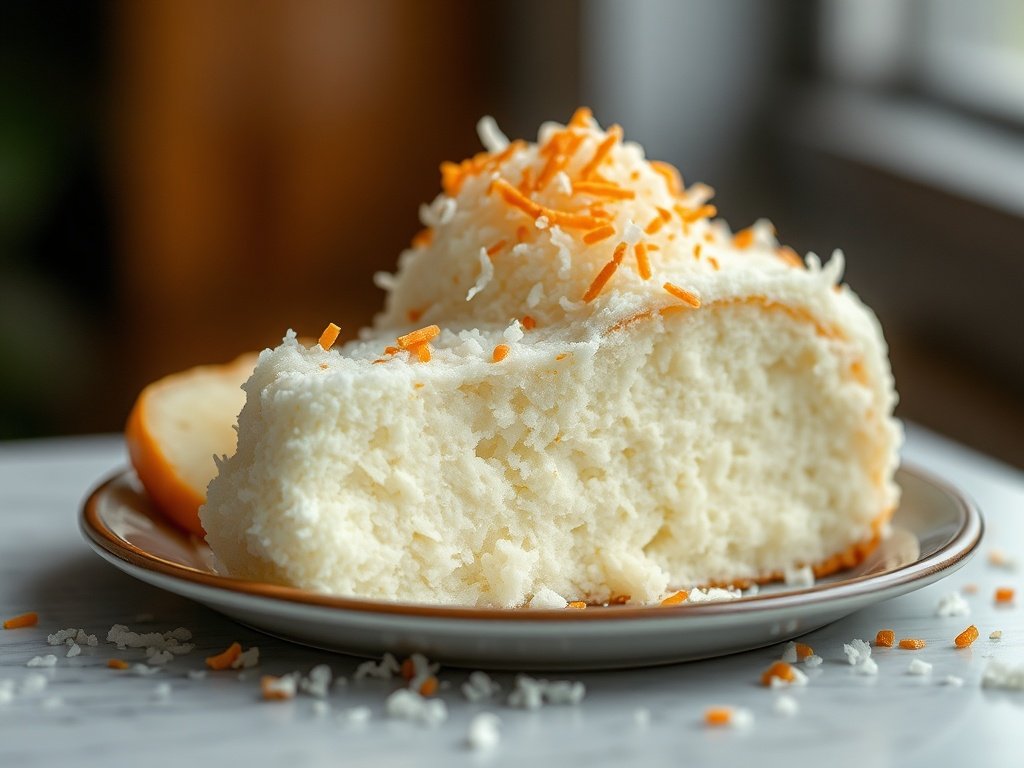
Imagine a dessert so light, so airy, it feels like biting into a sweet, tropical cloud. That, my friends, is the essence of our Coconut Cloud Cake. This extraordinary creation isn’t just a cake; it’s an experience – a whisper-soft crumb infused with the rich, exotic flavor of coconut, enveloped in a frosting so ethereal it practically melts on your tongue. From its pristine white appearance, often adorned with a delicate dusting of toasted coconut or fresh berries, to its incredibly tender texture, this cake promises a journey to a sun-drenched paradise with every forkful.
The “cloud” in its name refers to more than just a poetic description; it signifies an exceptionally delicate and airy texture, a hallmark achieved through a thoughtful combination of ingredients and techniques. We’re talking about whipped components, like fluffy egg whites folded into the batter and a light-as-air coconut whipped cream frosting, which together create a cake that defies its richness. It’s the perfect balance of sweet, deeply tropical coconut notes with a surprisingly delicate feel, making it an ideal showstopper for any celebration, a refreshing treat for summer gatherings, or simply a comforting indulgence when you crave something truly special.
You’ll adore this Coconut Cloud Cake not only for its sublime taste and texture but also for the pure joy it brings to any table. It’s a dessert that impresses without being overly complicated, offering a delightful escape from the ordinary. Get ready to discover the secrets to crafting this magnificent, melt-in-your-mouth masterpiece, a dessert that truly lives up to its heavenly name.
Nutritional Information
Per serving (approximate values, based on 12 servings):
- Calories: 520 kcal
- Protein: 6g
- Carbohydrates: 65g
- Fat: 28g
- Fiber: 2g
- Sodium: 310mg
Ingredients
- For the Cake Layers:
- 2 ½ cups (300g) cake flour, sifted
- 1 ½ teaspoons baking powder
- ½ teaspoon baking soda
- ½ teaspoon salt
- 1 cup (226g) unsalted butter, softened
- 1 ¾ cups (350g) granulated sugar
- 4 large eggs, separated (yolks and whites)
- 1 teaspoon pure vanilla extract
- 1 teaspoon pure coconut extract
- 1 cup (240ml) full-fat coconut milk, at room temperature
- ½ cup (45g) unsweetened shredded coconut
- ¼ cup (60ml) whole milk, at room temperature
- For the “Cloud” Frosting:
- 2 cups (480ml) heavy cream, chilled
- 1 can (13.5 oz / 400ml) full-fat coconut cream, chilled overnight (only scoop out the thick cream, discard liquid)
- ¾ cup (90g) powdered sugar, sifted
- 1 teaspoon pure vanilla extract
- ½ teaspoon pure coconut extract
- 4 oz (113g) cream cheese, softened (optional, for added stability and tang)
- For Garnish (Optional):
- ½ cup (45g) toasted shredded coconut
- Fresh berries (raspberries, blueberries, or sliced strawberries)
- Lime zest, finely grated
Instructions
- Prepare Cake Layers: Preheat your oven to 350°F (175°C). Grease and flour two 8-inch round cake pans, or line with parchment paper circles. In a medium bowl, whisk together the sifted cake flour, baking powder, baking soda, and salt. Set aside.
- In a large bowl, using an electric mixer, cream the softened unsalted butter and granulated sugar together on medium-high speed until light and fluffy, about 3-5 minutes.
- Reduce speed to medium and beat in the egg yolks one at a time, mixing well after each addition. Scrape down the sides of the bowl as needed. Stir in the vanilla extract and coconut extract.
- In a separate clean, dry bowl, beat the 4 egg whites with an electric mixer on medium-high speed until stiff peaks form. Set aside.
- In a small bowl or measuring cup, combine the full-fat coconut milk and whole milk.
- With the mixer on low speed, gradually add the dry ingredients to the butter mixture in three additions, alternating with the wet milk mixture in two additions, beginning and ending with the dry ingredients. Mix until just combined after each addition. Be careful not to overmix.
- Gently fold in the unsweetened shredded coconut into the batter. Then, very carefully, fold in the beaten egg whites in two additions using a spatula. This is crucial for maintaining the cake’s light, airy texture. Fold just until no white streaks remain.
- Divide the batter evenly between the two prepared cake pans. Smooth the tops with a spatula.
- Bake for 28-32 minutes, or until a wooden skewer inserted into the center of the cakes comes out clean.
- Remove cakes from the oven and let them cool in the pans for 10-15 minutes before inverting them onto a wire rack to cool completely. Ensure cakes are entirely cool before frosting.
- Prepare the “Cloud” Frosting: While the cakes cool, prepare the frosting. Ensure your heavy cream and chilled coconut cream (the thick, solid part only) are very cold. If using, beat the softened cream cheese in a large bowl until smooth.
- Add the chilled heavy cream, chilled coconut cream, sifted powdered sugar, vanilla extract, and coconut extract to the bowl (with cream cheese if using, otherwise directly into a large bowl).
- Using an electric mixer on medium-high speed, beat the mixture until stiff peaks form. This may take 5-7 minutes. Be careful not to overbeat, or it might become grainy. The frosting should be light, fluffy, and hold its shape beautifully.
- Assemble the Cake: Once the cake layers are completely cool, place one cake layer on your serving plate or cake stand. Spread about one-third of the “Cloud” frosting evenly over the top.
- Carefully place the second cake layer on top. Spread the remaining frosting over the top and sides of the cake, creating a beautiful, fluffy finish.
- Garnish (Optional): If desired, gently press toasted shredded coconut around the sides of the cake. Arrange fresh berries on top, or sprinkle with finely grated lime zest for a pop of color and freshness.
- Serve immediately or chill until ready to serve.
Cooking Tips and Variations
Achieving the perfect “cloud” texture is key to this cake’s magic. Here are some tips to ensure your cake is as ethereal as promised: Always use room temperature ingredients for the cake batter (butter, eggs, milks) as they emulsify better, creating a smoother batter and a more tender crumb. When sifting your cake flour, don’t skip this step; it removes lumps and incorporates air, contributing to a lighter texture. Cake flour itself is crucial here, as it has a lower protein content than all-purpose flour, resulting in a more delicate and fine crumb. If you don’t have cake flour, you can make your own by replacing 2 tablespoons of all-purpose flour with 2 tablespoons of cornstarch for every cup of flour needed, then sifting several times.
The gentle folding of whipped egg whites is perhaps the most critical technique. After incorporating the wet and dry ingredients, the batter will be relatively thick. The whipped egg whites are folded in last to aerate the batter without adding leavening. Use a large spatula and a gentle hand, folding from the bottom up and rotating the bowl. Stop as soon as no white streaks remain to avoid deflating the air. Similarly, avoid overmixing the batter at any stage; overmixing develops gluten, which can lead to a tough, dense cake. Mix only until ingredients are just combined.
For the frosting, ensure your heavy cream and coconut cream are thoroughly chilled. For best results, place your mixing bowl and whisk attachment in the freezer for 10-15 minutes before whipping. This helps the cream whip up faster and hold its volume better. The optional cream cheese in the frosting not only adds a subtle tang that balances the sweetness but also provides extra stability, which is especially helpful if you’re making the cake on a warm day or transporting it. Make sure the cream cheese is softened to room temperature before beating it smooth to prevent lumps.
Want to experiment? For a citrusy twist, add the zest of a whole lemon or lime to the cake batter and frosting. You could also swap out some of the shredded coconut in the batter for finely chopped macadamia nuts for an added crunch and nutty flavor. To make individual Coconut Cloud Cakes, bake the batter in a muffin tin lined with paper cups for about 20-25 minutes, then frost them like cupcakes. For an extra tropical punch, brush the cooled cake layers with a light coconut rum simple syrup before frosting. This adds moisture and a subtle boozy kick. You can also vary the garnishes with passion fruit pulp, mango slices, or even a sprinkle of edible flowers for a truly stunning presentation.
Storage and Reheating
This Coconut Cloud Cake is best enjoyed fresh, but it stores beautifully, allowing you to savor its delights for a few days. To store, place the cake in an airtight cake carrier or cover it loosely with plastic wrap. It must be refrigerated due to the fresh cream frosting. It will stay fresh and delicious in the refrigerator for up to 3-4 days. For the best flavor and texture, remove the cake from the refrigerator about 30-60 minutes before serving to allow the frosting to soften slightly and the cake to come closer to room temperature, which enhances its delicate qualities.
While reheating a whole cake is not recommended, individual slices can be brought to room temperature for optimal enjoyment. This cake does not typically require “reheating” in the traditional sense, as its charm lies in its cool, refreshing nature. If you wish to freeze the cake, it’s best to freeze individual, unfrosted cake layers. Wrap each cooled layer tightly in plastic wrap, then in aluminum foil, and store in the freezer for up to 2 months. Thaw frozen layers in the refrigerator overnight before frosting and assembling. You can also freeze individual slices of the frosted cake by placing them on a baking sheet to freeze solid, then wrapping each slice tightly in plastic wrap and foil. Thaw slices in the refrigerator or at room temperature for an hour or so before enjoying. Freezing may slightly alter the texture of the frosting, making it a bit less airy, but it will still be delicious.
Frequently Asked Questions
Can I use all-purpose flour instead of cake flour?
While cake flour is highly recommended for its low protein content, which contributes to the cake’s signature tender and delicate crumb, you can substitute it with all-purpose flour if necessary. To do so, for every cup of cake flour, measure out 1 cup of all-purpose flour, remove 2 tablespoons, and then replace those 2 tablespoons with 2 tablespoons of cornstarch. Sift this mixture together at least 2-3 times to ensure it’s well combined and aerated. The resulting cake may be slightly less delicate than one made with pure cake flour, but it will still be delicious.
My frosting isn’t getting stiff. What am I doing wrong?
The most common reasons for runny frosting are ingredients that aren’t cold enough or overbeating. Ensure your heavy cream and especially the coconut cream are thoroughly chilled, ideally overnight in the refrigerator. The solid coconut cream is crucial for the frosting’s structure. Also, make sure your mixing bowl and whisk attachment are cold; placing them in the freezer for 10-15 minutes can make a big difference. If the frosting starts to look grainy, you’ve likely overbeaten it past stiff peaks, causing the fat to separate. Unfortunately, this is hard to fix, so watch it closely as you whip.
Can I make this cake ahead of time?
Yes, you can absolutely make parts of this cake ahead of time. The cake layers can be baked a day in advance, cooled completely, wrapped tightly in plastic wrap, and stored at room temperature or in the refrigerator. The frosting can also be made a day ahead and stored in an airtight container in the refrigerator. However, it will likely stiffen significantly when chilled. Before frosting the cake, you may need to re-whip the frosting briefly on low speed for a minute or two to restore its airy consistency. For the best texture and freshness, assemble the cake no more than 12-24 hours before serving.
Why did my cake layers sink in the middle?
Cake layers sinking in the middle can be due to several factors. One common cause is opening the oven door too early during baking, which causes a sudden drop in temperature and can collapse the delicate structure. Ensure you don’t open the oven door until at least two-thirds of the baking time has passed. Other reasons include an oven that’s too cool (always use an oven thermometer to verify accuracy), overmixing the batter (which develops too much gluten), or using too much leavening agent (baking powder/soda). Make sure to measure your ingredients precisely, especially the leaveners, and follow the folding instructions carefully to maintain aeration.
