Introduction
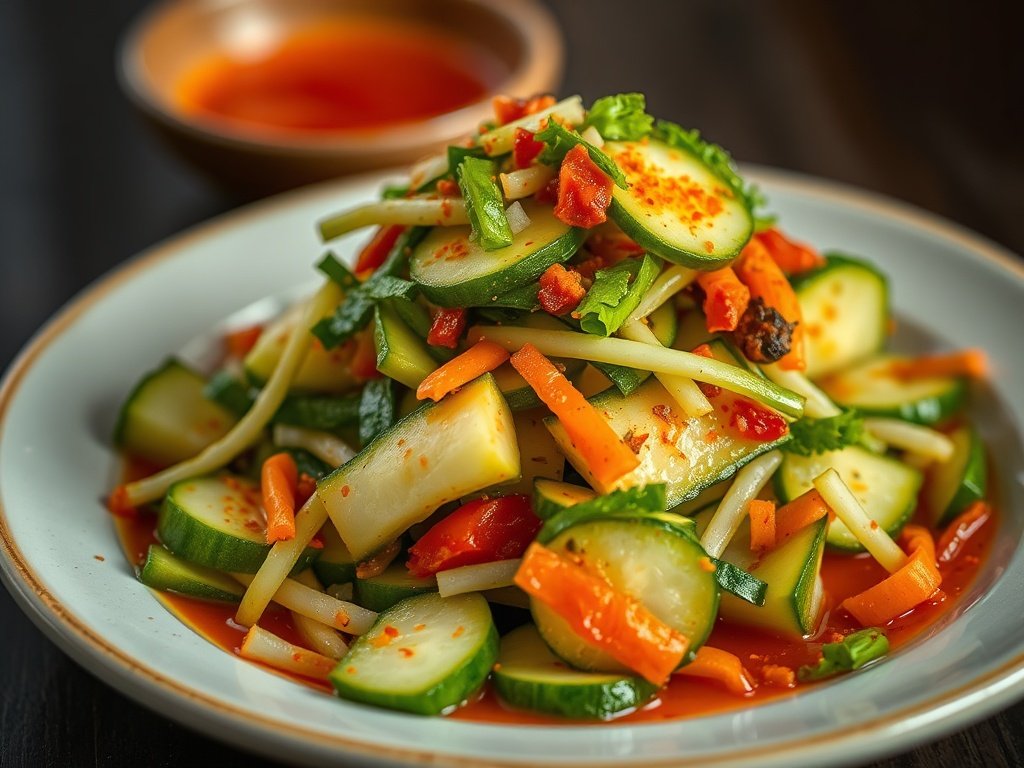
Prepare to meet your new favorite Korean side dish: Spicy Korean Cucumber Salad, affectionately known as Oi Muchim. This vibrant, refreshing banchan (Korean side dish) is a staple in Korean cuisine, celebrated for its irresistible crunch, bold flavors, and incredible ease of preparation. Whether you’re a seasoned chef or a kitchen novice, Oi Muchim offers a delightful culinary adventure that promises to elevate any meal with its zesty, spicy, and tangy profile.
What makes Oi Muchim truly special is its perfect balance of textures and tastes. Imagine crisp cucumber slices, lightly salted and perfectly drained, tossed in a harmonious dressing of fiery gochugaru (Korean chili flakes), pungent garlic, savory soy sauce, bright rice vinegar, and nutty sesame oil. The result is a symphony of flavors that invigorates the palate, providing a refreshing contrast to richer main courses or a satisfyingly light snack on its own. It’s the kind of dish that disappears quickly from the table, leaving everyone craving just one more bite.
Beyond its incredible taste, Oi Muchim boasts an undeniable appeal due to its simplicity. Unlike many Korean dishes that require extensive cooking or complex techniques, this spicy cucumber salad comes together in mere minutes, requiring no cooking whatsoever. This makes it an ideal choice for busy weeknights, last-minute gatherings, or when you simply want to add a burst of fresh, authentic Korean flavor to your meal without the fuss. It’s truly one of the quickest and most rewarding Korean recipes you can master, delivering maximum flavor with minimal effort.
Nutritional Information
Per serving (approximate values, based on 6 servings):
- Calories: 95
- Protein: 2g
- Carbohydrates: 11g
- Fat: 5g
- Fiber: 2g
- Sodium: 420mg
Ingredients
- Cucumbers: 2-3 medium Persian or Kirby cucumbers, or 1 large English cucumber (approximately 1.5 lbs / 680g). These varieties are preferred for their thin skin, minimal seeds, and excellent crispness.
- Salt: 1 teaspoon fine sea salt, for salting the cucumbers. This crucial step draws out excess moisture, ensuring your salad remains delightfully crunchy and prevents a watery dressing.
- Gochugaru (Korean Chili Flakes): 1.5 to 2 tablespoons, or to taste. This is the cornerstone of Oi Muchim’s signature spice and vibrant red color. Adjust the amount based on your preferred heat level.
- Garlic: 3 cloves, freshly minced. Fresh garlic provides an indispensable pungent and aromatic depth that dried garlic simply cannot replicate.
- Toasted Sesame Oil: 1 tablespoon. This adds a rich, nutty aroma and flavor that is characteristic of many Korean dishes. Be sure to use toasted sesame oil for maximum fragrance.
- Rice Vinegar: 2 tablespoons. This provides the essential tangy brightness that balances the spice and savory notes, giving the salad its refreshing quality.
- Soy Sauce: 1 tablespoon. For umami and savory depth. You can substitute with tamari for a gluten-free option.
- Granulated Sugar: 1-2 teaspoons (optional, but highly recommended). A small amount of sugar beautifully balances the acidity of the vinegar and the heat of the gochugaru, creating a more well-rounded flavor profile. Korean plum extract (maesil-cheong) can be used as an alternative for a more complex sweetness.
- Toasted Sesame Seeds: 1 teaspoon, for garnish and a subtle nutty crunch.
- Green Onions (Scallions): 1-2 stalks, thinly sliced (optional). Adds a mild oniony flavor and a touch of fresh green color.
- Fish Sauce: 1/2 teaspoon (optional). A small dash can add an extra layer of savory umami, deepening the overall flavor profile.
Instructions
- Prepare the Cucumbers: Begin by thoroughly washing your chosen cucumbers. If using Persian or Kirby cucumbers, you can slice them into 1/4-inch thick rounds or half-moons. For an English cucumber, you might prefer to slice it lengthwise into halves or quarters, then cut those into 1/4-inch thick pieces, creating crescent shapes. The key is to aim for uniform pieces that are easy to eat and absorb the dressing evenly.
- Salt the Cucumbers: Place the sliced cucumbers in a colander. Sprinkle them generously with 1 teaspoon of fine sea salt. Using your hands, gently toss the cucumbers to ensure that each piece is lightly and evenly coated with salt. This step is absolutely critical, as the salt will draw out excess water from the cucumbers. Allow the salted cucumbers to sit in the colander for 15-20 minutes. You will notice a significant amount of liquid accumulating at the bottom of the colander; this is precisely what we want to remove to prevent a watery salad and maintain crispness.
- Rinse and Dry the Cucumbers: After the salting period, rinse the cucumbers thoroughly under cold running water. This removes the excess salt and any remaining bitter liquid. It’s important to rinse well, otherwise, your salad might end up too salty. Once rinsed, transfer the cucumbers to a clean kitchen towel or several layers of paper towels. Pat them very, very dry. This step is just as important as salting; any residual water will dilute your dressing and compromise the crisp texture of the salad. Squeeze gently to remove as much moisture as possible without bruising the cucumbers.
- Prepare the Dressing: While the cucumbers are salting or drying, prepare the vibrant dressing. In a medium-sized mixing bowl, combine the gochugaru (Korean chili flakes), freshly minced garlic, toasted sesame oil, rice vinegar, soy sauce, and granulated sugar (if using). Whisk all the ingredients together vigorously until they are well combined and the sugar has dissolved. Taste the dressing and adjust the seasonings as needed – perhaps a little more sugar to balance the spice, more vinegar for tang, or a touch more soy sauce for savoriness. If using fish sauce, add it now.
- Combine Cucumbers and Dressing: Add the thoroughly dried cucumbers to the bowl with the prepared dressing. Using clean hands or a spatula, gently toss the cucumbers with the dressing. The goal is to coat every piece evenly without bruising the delicate cucumber slices. Continue tossing until the cucumbers are beautifully coated in the bright red, aromatic sauce.
- Garnish and Serve: Transfer the Spicy Korean Cucumber Salad to a serving bowl. Sprinkle generously with toasted sesame seeds for an added nutty aroma and subtle crunch. If you’re using sliced green onions, scatter them over the top for a fresh garnish. For the best flavor and crispness, serve the Oi Muchim immediately or chill it in the refrigerator for at least 30 minutes to allow the flavors to meld and the salad to become wonderfully refreshing.
Cooking Tips and Variations
Achieving the perfect Oi Muchim is all about understanding a few key principles and daring to customize. Here are some insights and variations to make your Spicy Korean Cucumber Salad truly shine:
The Importance of Salting and Drying
We cannot emphasize enough how crucial the salting and drying steps are. Skipping these will result in a watery salad that quickly loses its crunch and dilutes the vibrant dressing. The salt draws out excess moisture, concentrating the cucumber’s flavor and firming its texture. Rinsing removes the excess salt, and thoroughly drying ensures the dressing adheres beautifully without becoming watery. Think of it as a mini-brining process that transforms a simple vegetable into a crisp, flavor-absorbing vessel.
Adjusting the Spice Level
Gochugaru is the star of the show, but its heat can be tailored to your preference. If you’re sensitive to spice, start with 1 tablespoon of gochugaru and taste the dressing before adding the cucumbers. You can always add more in small increments until you reach your desired heat. For those who love a fiery kick, feel free to increase it to 2.5 or even 3 tablespoons. Remember, the heat will mellow slightly as the salad chills and the flavors meld, but it’s easier to add spice than to remove it.
Enhancing the Crunch and Flavor Absorption
For an even more intense crunch and better sauce absorption, some traditional methods suggest lightly “bruising” the cucumbers after salting and drying. This can be done by gently pounding them with a potato masher or the flat side of a cleaver. This technique slightly breaks down the cell walls, allowing the dressing to penetrate deeper and giving the cucumbers a uniquely satisfying, almost “shattered” texture. Be careful not to overdo it, as you still want distinct cucumber pieces.
Achieving Flavor Harmony
The best Oi Muchim is a symphony of spicy, tangy, savory, and subtly sweet notes. Always taste your dressing before combining it with the cucumbers. If it’s too spicy, a bit more sugar or a squeeze of fresh lime juice can help. If it lacks tang, a touch more rice vinegar will brighten it up. For more savory depth, a tiny splash of fish sauce (if not already included) or an extra dash of soy sauce can work wonders. Don’t be afraid to adjust; your palate is the best guide!
Creative Variations and Additions
- Onions and Carrots: For extra texture, color, and a subtle sweetness, consider adding a quarter cup of thinly sliced red onion or shredded carrot to the salad along with the cucumbers.
- Radishes: Thinly sliced Korean radish (mu) or even regular red radishes can add another layer of peppery crunch and visual appeal.
- Herbs: While not traditional, a sprinkle of fresh cilantro or finely chopped chives just before serving can add an unexpected fresh aroma.
- Fermented Elements: For a deeper, more complex umami, some recipes include a tiny bit of gochujang (Korean chili paste), but use sparingly as it has a much thicker consistency and stronger flavor than gochugaru.
- Sweetener Alternatives: Instead of granulated sugar, you can use Korean plum extract (maesil-cheong) for a more nuanced, fruity sweetness that also adds a subtle tang. Honey or maple syrup can also be used in a pinch, though they will impart slightly different flavor notes.
Serving Suggestions
Oi Muchim is incredibly versatile. It’s a non-negotiable banchan for any Korean BBQ feast, where its refreshing qualities cut through the richness of grilled meats. It pairs beautifully with hearty stews like Kimchi Jjigae, acts as a palate cleanser with bibimbap, or simply elevates a bowl of plain steamed rice. Beyond Korean cuisine, it makes a fantastic light side dish for grilled chicken or fish, a zesty addition to sandwiches, or a vibrant topping for grain bowls. Don’t underestimate its power as a standalone, healthy snack!
Storage and Reheating
Spicy Korean Cucumber Salad (Oi Muchim) is at its absolute best when enjoyed fresh, ideally within a few hours of preparation, when the cucumbers are at their crispiest and the flavors are most vibrant. However, it can be stored and still enjoyed for a few days with proper care.
Storage
To store leftover Oi Muchim, transfer it to an airtight container. Make sure the container is sealed tightly to prevent any air from getting in, which can accelerate the softening of the cucumbers and diminish the freshness of the flavors. Store the container in the refrigerator. The salad will maintain a good level of crispness for about 1-2 days. Beyond that, the cucumbers will gradually soften as they continue to release water and absorb the dressing, although the flavor will still be delicious.
It’s generally not recommended to store Oi Muchim for longer than 3 days. While it might still be safe to eat, the texture will have significantly changed, becoming much softer and less appealing as a “salad.”
Reheating
Oi Muchim is a cold salad and should not be reheated. Reheating would completely destroy the crisp texture of the cucumbers and alter the delicate balance of the dressing. Always serve it chilled, straight from the refrigerator. If you’ve made it in advance and stored it, simply take it out of the fridge a few minutes before serving to let it come slightly closer to room temperature, though it’s perfectly delightful served icy cold as well.
Meal Prep Considerations
Because of its quick preparation time and relatively good shelf life, Oi Muchim is an excellent candidate for weekly meal prep. You can make a batch on Sunday and enjoy it as a side dish throughout the week. Be aware that the texture will change over time, but the refreshing flavor will largely remain. If you’re particularly keen on maximum crispness, you might consider preparing the dressing separately and only tossing it with the salted and dried cucumbers just before serving, especially if you plan to store it for more than a day.
Frequently Asked Questions
Can I use regular slicing cucumbers for Oi Muchim?
While you technically *can* use regular slicing cucumbers, it’s generally not recommended for the best results. Standard slicing cucumbers have a higher water content and larger seeds compared to Persian, Kirby, or English cucumbers. This means they tend to become watery and lose their crispness much faster, even after salting. If you must use them, be extra diligent with the salting and drying process, perhaps even extending the salting time slightly, and ensure you remove as many seeds as possible before slicing. However, for that authentic, satisfying crunch and less diluted flavor, stick to the recommended varieties if you can.
Why is the salting step so important, and can I skip it?
The salting step is absolutely crucial and should not be skipped! It serves two primary purposes: firstly, it draws out excess moisture from the cucumbers. If this water isn’t removed, it will leach into your dressing, making the salad watery and bland. Secondly, salting helps to firm up the cucumber’s cell walls, which enhances their crispness and prevents them from becoming soggy too quickly. Skipping this step will almost certainly result in a disappointing, watery, and less crunchy salad that doesn’t hold up well.
How long does Oi Muchim last in the refrigerator?
Oi Muchim is best enjoyed fresh, ideally within the first day or two. When stored in an airtight container in the refrigerator, it will keep for up to 2-3 days. However, it’s important to note that the cucumbers will gradually lose their crispness over time as they continue to release moisture and absorb the dressing. By the third day, the texture will be noticeably softer, but the flavors will still be delicious. It is not suitable for freezing, as the cucumbers would become completely mushy upon thawing.
Is this salad very spicy, and how can I adjust the heat?
The spice level of Oi Muchim is entirely customizable to your preference. The recipe typically calls for 1.5 to 2 tablespoons of gochugaru (Korean chili flakes), which provides a moderate and pleasant heat for most palates. If you prefer a milder salad, start with just 1 tablespoon of gochugaru. If you love a fiery kick, you can increase it to 2.5 or even 3 tablespoons. Always taste the dressing before combining it with the cucumbers, as it’s easier to add more spice than to take it away. If you find your salad too spicy, a little extra sugar or a squeeze of lime juice can help to temper the heat and balance the flavors.
