Introduction
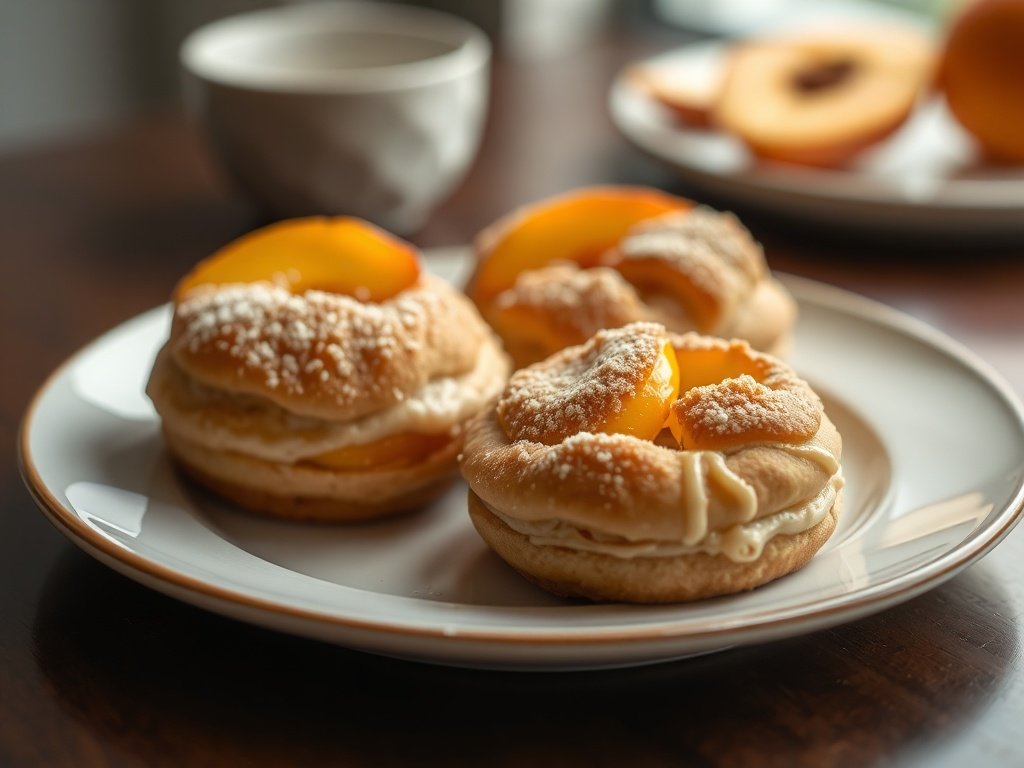
Imagine the comforting embrace of a warm peach cobbler, its luscious, spiced fruit filling bubbling beneath a tender, sweet crust. Now, picture that same warmth, but nestled inside a golden-fried, pillowy soft donut, perfectly portioned for individual enjoyment. That, my friends, is the magic of Peach Cobbler Donut Hand Pies – a truly irresistible creation that marries the soulful comfort of a classic dessert with the playful convenience of a handheld treat. This recipe isn’t just about making food; it’s about crafting an experience, a delightful fusion that brings together two beloved culinary worlds into one spectacular bite.
These hand pies are more than just a dessert; they are a celebration of flavor and texture. Each bite offers the sweet, sun-kissed taste of ripe peaches, gently spiced with cinnamon and nutmeg, encased in a tender, slightly chewy dough that has all the hallmarks of your favorite yeast-risen donut. Fried to a beautiful golden brown and then draped in a simple, sweet glaze, they are an absolute showstopper. They evoke a sense of nostalgia while simultaneously offering something fresh and exciting, making them an instant crowd-pleaser for any occasion, from a leisurely Sunday brunch to a memorable dessert after a special meal, or even just a delightful afternoon snack.
The beauty of Peach Cobbler Donut Hand Pies lies in their innovative charm and undeniable deliciousness. They are portable, easy to share (or not!), and offer a satisfying combination of textures – the crisp exterior yielding to the soft donut interior and the warm, gooey fruit filling. Whether you’re a seasoned baker or just looking for a fun and rewarding kitchen project, this recipe promises a culinary adventure that culminates in a treat so unique and delectable, it will have everyone asking for more. Get ready to embark on a sweet journey that will elevate your dessert game and bring smiles to every face.
Nutritional Information
Per serving (approximate values, based on 1 hand pie):
- Calories: 480 kcal
- Protein: 7g
- Carbohydrates: 72g
- Fat: 19g
- Fiber: 3g
- Sodium: 280mg
Ingredients
For the Peach Cobbler Filling:
- 2 pounds fresh ripe peaches, peeled, pitted, and diced (about 4 cups), or 2 (15-ounce) cans sliced peaches, well-drained and diced
- 1/2 cup granulated sugar
- 1/4 cup light brown sugar, packed
- 2 tablespoons cornstarch (or all-purpose flour for a cloudier, less clear filling)
- 1 teaspoon ground cinnamon
- 1/4 teaspoon ground nutmeg
- Pinch of ground ginger (optional, for extra warmth)
- 1 tablespoon fresh lemon juice
- 2 tablespoons unsalted butter
- 1 teaspoon pure vanilla extract
For the Donut Hand Pie Dough:
- 1 cup warm whole milk (105-115°F / 40-46°C)
- 2 1/4 teaspoons active dry yeast (one standard packet)
- 1/4 cup granulated sugar, plus 1 teaspoon for yeast
- 1 large egg, at room temperature
- 1 large egg yolk, at room temperature
- 1/4 cup unsalted butter, melted and cooled slightly
- 1 teaspoon salt
- 3 1/2 to 4 cups all-purpose flour, plus more for dusting
- Vegetable oil, canola oil, or peanut oil for deep frying (about 6-8 cups)
For the Glaze:
- 2 cups powdered sugar, sifted
- 3-4 tablespoons whole milk or heavy cream, adjust as needed
- 1 teaspoon pure vanilla extract
- 1 tablespoon unsalted butter, melted (optional, for richness)
- 1/4 teaspoon ground cinnamon (optional, for spiced glaze)
Instructions
- Prepare the Peach Cobbler Filling: In a medium saucepan, combine the diced peaches, granulated sugar, brown sugar, cornstarch, cinnamon, nutmeg, and optional ginger. Stir gently to combine. Place the saucepan over medium heat and bring the mixture to a gentle simmer, stirring occasionally.
- Continue to cook, stirring, for 8-10 minutes, or until the peaches have softened and the mixture has thickened to a jam-like consistency. Remove from heat and stir in the lemon juice, butter, and vanilla extract until the butter is fully melted and incorporated. Transfer the filling to a shallow dish or bowl, spread it out, and allow it to cool completely to room temperature. This step is crucial; warm filling will melt the dough. You can even chill it in the refrigerator for faster cooling.
- Activate the Yeast: In the bowl of a stand mixer fitted with the dough hook attachment, pour the warm milk. Sprinkle the 1 teaspoon of granulated sugar and the active dry yeast over the milk. Let it sit for 5-10 minutes until the mixture becomes foamy, indicating the yeast is active. If it doesn’t foam, your yeast may be old, or the milk was too hot/cold, and you’ll need to start again with new yeast.
- Prepare the Donut Dough: To the yeast mixture, add the remaining 1/4 cup granulated sugar, the whole egg, egg yolk, melted butter, and salt. Mix on low speed until just combined. Gradually add 3 cups of the all-purpose flour, mixing on low speed until a shaggy dough forms.
- Increase the speed to medium-low and continue to knead, adding the remaining flour 1/4 cup at a time, until the dough comes together and pulls away from the sides of the bowl. You may not need all 4 cups of flour; the dough should be soft, slightly tacky, but not sticky. Knead for 5-7 minutes until the dough is smooth, elastic, and passes the windowpane test (you can stretch a small piece thin enough to see light through it without tearing).
- First Rise: Lightly grease a large bowl with vegetable oil. Transfer the dough to the bowl, turning it once to coat the entire surface. Cover the bowl tightly with plastic wrap or a clean kitchen towel. Place the bowl in a warm, draft-free place for 1 to 1.5 hours, or until the dough has doubled in size.
- Assemble the Hand Pies: Once the dough has risen, gently punch it down to release the air. Turn the dough out onto a lightly floured surface. Divide the dough in half for easier handling. Roll out one half of the dough to about 1/4-inch thickness.
- Using a 3-4 inch round cookie cutter, biscuit cutter, or even the rim of a glass, cut out as many circles as possible. Gather the scraps, gently knead them together, and re-roll to cut more circles. Repeat with the second half of the dough.
- Spoon about 1.5 to 2 tablespoons of the completely cooled peach filling onto the center of one half of each dough circle. Be careful not to overfill, and leave a clear border around the edges.
- Lightly moisten the edges of the dough circle with a little water or an egg wash (1 egg whisked with 1 teaspoon water). Fold the other half of the dough circle over the filling, creating a half-moon shape. Press the edges firmly to seal. Use the tines of a fork to crimp the edges all around, ensuring a tight seal that will prevent the filling from leaking during frying. Place the assembled hand pies on a parchment-lined baking sheet.
- Second Rise (Proofing): Loosely cover the assembled hand pies with plastic wrap or a clean kitchen towel. Let them rest in a warm place for 20-30 minutes for a second, shorter rise. This will make them light and airy.
- Prepare for Frying: While the hand pies are proofing, pour 6-8 cups of vegetable oil into a large, heavy-bottomed pot or Dutch oven, or use a deep fryer. Heat the oil over medium-high heat to 350-360°F (175-180°C). Use a deep-fry thermometer to monitor the temperature accurately.
- Fry the Hand Pies: Carefully lower 2-3 hand pies into the hot oil, ensuring not to overcrowd the pot. Fry for 2-3 minutes per side, or until golden brown and cooked through. The exact time will depend on the oil temperature and the thickness of your pies. Use tongs or a slotted spoon to flip them gently.
- Once golden, carefully remove the fried hand pies from the oil and place them on a wire rack set over a baking sheet lined with paper towels to drain any excess oil. Repeat with the remaining hand pies, making sure the oil temperature returns to 350-360°F (175-180°C) between batches.
- Prepare the Glaze: While the hand pies are still warm, prepare the glaze. In a medium bowl, whisk together the sifted powdered sugar, 3 tablespoons of milk or cream, vanilla extract, and optional melted butter and cinnamon until smooth and pourable. If the glaze is too thick, add more milk a teaspoon at a time; if it’s too thin, add more powdered sugar.
- Glaze the Hand Pies: Dip each warm hand pie into the glaze, or drizzle the glaze generously over them. Place them back on the wire rack to allow any excess glaze to drip off and for the glaze to set slightly. Serve warm and enjoy your delightful Peach Cobbler Donut Hand Pies!
Cooking Tips and Variations
Achieving the perfect Peach Cobbler Donut Hand Pie is all about attention to detail. For the filling, make sure your peaches are ripe for the best flavor, but not overly soft. If using canned peaches, ensure they are very well drained to prevent a watery filling. The cornstarch is key for thickening, so don’t skimp on it, and always cool the filling completely before assembly. This prevents the dough from becoming soggy or tearing when you fold it over. A warm filling will also make the dough sticky and difficult to work with.
When it comes to the donut dough, the temperature of your milk is crucial for activating the yeast. Too hot will kill it, too cold won’t activate it. Aim for lukewarm, like a baby’s bath. Don’t be afraid to adjust the flour amount slightly; humidity and altitude can affect how much flour your dough needs. The dough should be soft and pliable, not stiff. Kneading thoroughly is essential for developing gluten, which gives the donuts their characteristic chewiness. For the best rise, ensure your proofing environment is warm and draft-free.
For assembly, don’t overfill the hand pies. A little less filling is better than a burst pie during frying. Sealing the edges tightly is paramount. An egg wash or a little water on the edges acts as glue, and crimping with a fork provides a secure seal and a pretty edge. When frying, maintaining a consistent oil temperature is key to evenly cooked, golden-brown hand pies. If the oil is too hot, they’ll burn outside and be raw inside; too cool, they’ll absorb too much oil and be greasy. Use a thermometer! For a healthier alternative, you can bake these hand pies at 375°F (190°C) for 15-20 minutes, or until golden brown, after brushing with an egg wash, though they won’t have the classic donut texture.
Consider creative variations to truly make these your own. Instead of peaches, try other fruit fillings like apple, cherry, or mixed berries for different seasonal delights. A pinch of cardamom or a dash of almond extract in the peach filling can add another layer of sophisticated flavor. For the glaze, experiment with a maple glaze for an autumnal touch, or a cream cheese glaze for extra decadence. You could also sprinkle the warm fried hand pies with cinnamon sugar instead of a glaze for a classic donut finish. Garnishing with a few toasted pecans or a dollop of whipped cream elevates these hand pies even further, making them perfect for a dessert presentation.
Storage and Reheating
These Peach Cobbler Donut Hand Pies are undoubtedly best enjoyed fresh, while they are still warm and the glaze is perfectly set. However, if you find yourself with leftovers (a rare occurrence, we predict!), they can be stored to be savored later. To store, allow the hand pies to cool completely to room temperature. Once cooled, place them in an airtight container. They can be kept at room temperature for up to 1-2 days. For longer storage, you can refrigerate them for up to 3-4 days. While refrigeration helps extend their shelf life, it may slightly alter the texture of the donut dough, making it a bit denser.
For the best reheating experience, especially to regain some of that lovely warmth and tenderness, an oven or toaster oven is your best friend. Preheat your oven or toaster oven to 300°F (150°C). Place the hand pies directly on a baking sheet and heat for about 8-12 minutes, or until warmed through. This method helps to crisp up the exterior slightly and warm the filling without making the dough soggy. Avoid microwaving, as this tends to make the donut dough rubbery and the filling excessively hot, while losing any crispness. If you prefer them cold, simply enjoy them straight from the fridge. Just remember, while still delicious, the texture will be softer and less “donut-like” than when freshly made.
Frequently Asked Questions
Can I use frozen peaches for the filling?
Absolutely! If fresh peaches aren’t in season or readily available, frozen peaches are an excellent alternative. Be sure to thaw them completely before using and drain any excess liquid very well. Frozen peaches tend to release more water than fresh ones, so you might need to cook the filling a little longer to achieve the desired thick consistency, or add an extra half tablespoon of cornstarch to compensate. The goal is a thick, jam-like filling that won’t make your dough soggy.
Can I bake these hand pies instead of frying them?
Yes, you can! While frying gives them that true donut-like texture, baking is a great option for a less indulgent version. To bake, preheat your oven to 375°F (190°C). After the second rise, brush the tops of the hand pies with an egg wash (one egg whisked with a tablespoon of water) for a golden finish. Bake for 15-20 minutes, or until they are puffed and golden brown. The texture will be more akin to a soft pastry than a fried donut, but they will still be incredibly delicious.
How do I know if my yeast is active?
Activating your yeast is a critical first step. To check if your active dry yeast is alive and well, sprinkle it over warm milk (around 105-115°F / 40-46°C) with a pinch of sugar. Let it sit for 5-10 minutes. If the mixture becomes foamy and bubbly on the surface, your yeast is active and ready to go. If it remains flat or develops no foam, your yeast is likely expired or the liquid temperature was off, and you’ll need to start again with fresh yeast.
Can I make the dough ahead of time?
Yes, you can prepare the donut dough in advance. After the first rise, you can punch down the dough, place it in a lightly oiled bowl, cover it tightly with plastic wrap, and refrigerate it for up to 24 hours. When you’re ready to use it, remove the dough from the refrigerator and let it come to room temperature for about 30-60 minutes before rolling it out and proceeding with the assembly and second rise instructions. This allows for convenient planning, especially if you’re making these for a brunch event.
