Introduction
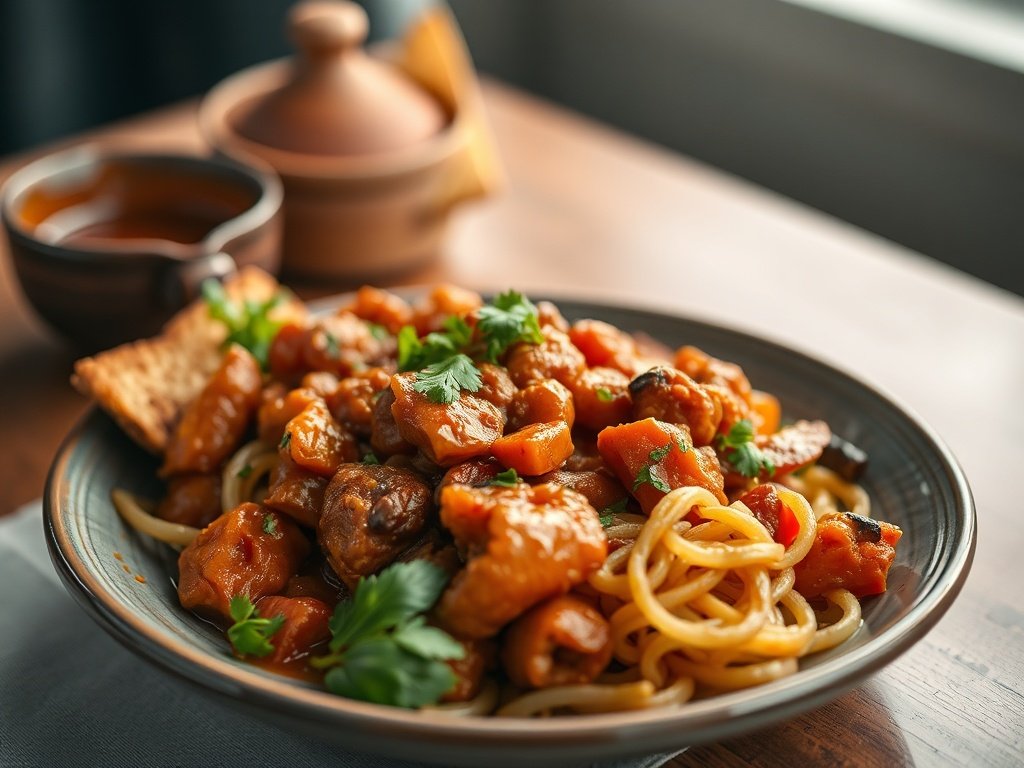
Step into a world where vibrant colors dance with intoxicating aromas, where every dish tells a story of ancient spice routes and shared family traditions. Moroccan cuisine is a celebration of the senses, a tapestry woven with sweet, savory, and tangy notes, and at its heart lies the magnificent Tajine. More than just a meal, a Moroccan Tajine is an experience, an invitation to gather around a table and savor the warmth of a dish slow-cooked to perfection, brimming with flavors that transport you straight to the bustling souks and sun-drenched landscapes of North Africa.
The term “Tajine” itself is wonderfully dual-faceted, referring both to the iconic conical earthenware pot that gives the dish its name and to the aromatic, tender stew prepared within it. The unique design of the Tajine pot, with its heavy base and tall, steam-trapping lid, creates a miniature oven effect. This ingenious structure allows ingredients to gently braise in their own juices, infusing every bite with deep, complex flavors while keeping everything incredibly moist and tender. It’s a testament to centuries of culinary wisdom, designed for efficiency and flavor development.
Why should you embark on this culinary journey? Because a Moroccan Tajine offers an unparalleled symphony of tastes and textures. Imagine succulent pieces of lamb or chicken, falling off the bone, nestled among sweet dried fruits, briny olives, and tangy preserved lemons, all bathed in a rich, spiced sauce. The unique blend of warm spices like Ras el Hanout, turmeric, and ginger creates a comforting yet exotic profile, making it a perfect one-pot meal for a cozy family dinner or an impressive dish for entertaining. It’s comforting, nourishing, and utterly delicious – a true masterpiece of slow cooking that promises a memorable adventure for your palate.
Nutritional Information
Per serving (approximate values for a lamb and vegetable tajine, serves 6):
- Calories: 720 kcal
- Protein: 48g
- Carbohydrates: 45g
- Fat: 38g
- Fiber: 9g
- Sodium: 950mg
Ingredients
- 2 tablespoons olive oil
- 2.5 pounds boneless lamb shoulder or shank, cut into 2-inch cubes (or 8-10 bone-in chicken thighs/drumsticks)
- 2 large yellow onions, thinly sliced
- 4 cloves garlic, minced
- 1 piece fresh ginger (2-inch), grated
- 2 tablespoons Ras el Hanout spice blend (a complex Moroccan blend)
- 1 teaspoon ground turmeric
- 1 teaspoon ground ginger
- 1 teaspoon ground cumin
- 1 tablespoon sweet paprika
- Pinch of saffron threads, steeped in 2 tablespoons warm water
- 1/2 cup dried apricots or prunes, halved
- 1/2 preserved lemon, rind only, rinsed and finely chopped
- 1/2 cup green or purple olives, pitted
- 3 medium carrots, peeled and cut into 2-inch chunks
- 2 medium potatoes, peeled and cut into 2-inch chunks
- 1 medium zucchini, cut into 1-inch thick rounds
- 2 ripe tomatoes, roughly chopped or 1 cup canned diced tomatoes
- 3 cups water or low-sodium chicken/vegetable broth
- 1/2 cup fresh cilantro, chopped (for garnish)
- 1/4 cup fresh parsley, chopped (for garnish)
- Salt and freshly ground black pepper to taste
Instructions
- Prepare the Meat: Pat the lamb cubes (or chicken pieces) dry with paper towels. Season generously with salt and freshly ground black pepper.
- Sear the Meat: Heat the olive oil in the base of your tajine pot (or a large Dutch oven) over medium-high heat. Add the lamb in batches, ensuring not to overcrowd the pot, and sear until nicely browned on all sides. This step is crucial for developing deep flavor. Remove the browned meat and set aside. If using chicken, sear skin-side down until golden and crisp, then flip and sear other sides.
- Sauté Aromatics: Reduce the heat to medium. Add the sliced onions to the pot and cook, stirring occasionally, until softened and translucent, about 8-10 minutes. Add the minced garlic and grated fresh ginger, and cook for another 2 minutes until fragrant.
- Toast Spices: Stir in the Ras el Hanout, ground turmeric, ground ginger, ground cumin, and paprika. Cook for 1-2 minutes, stirring constantly, allowing the spices to bloom and release their aromas. This brief toasting enhances their flavor.
- Deglaze and Return Meat: Pour in the water or broth, scraping the bottom of the pot with a wooden spoon to loosen any browned bits, which are packed with flavor. Return the browned lamb (or chicken) to the pot. Stir in the steeped saffron and its water.
- Layer Vegetables and Fruits: Arrange the carrots and potatoes around and on top of the meat. Scatter the dried apricots/prunes, chopped preserved lemon, and olives over the vegetables. Finally, add the zucchini rounds and chopped fresh tomatoes on top. Do not stir extensively once the vegetables are layered, as the tajine cooks in distinct layers.
- Simmer and Cook: Cover the tajine pot with its conical lid (or the Dutch oven with its lid). Bring the liquid to a gentle simmer, then reduce the heat to low. Cook for 2 to 3 hours for lamb (or 45-60 minutes for chicken), or until the meat is fork-tender and the vegetables are soft. Resist the urge to lift the lid too frequently, as this releases the steam crucial for the cooking process. Check liquid levels periodically; if it seems to be drying out, add a little more hot water or broth.
- Rest and Garnish: Once cooked, remove the tajine from the heat and let it rest, covered, for at least 10-15 minutes. This allows the flavors to meld further and the sauce to thicken slightly.
- Serve: Before serving, gently stir in half of the fresh cilantro and parsley. Garnish with the remaining fresh herbs. Serve directly from the tajine pot with couscous, crusty bread (khobz), or rice to soak up the glorious sauce.
Cooking Tips and Variations
Achieving the perfect Moroccan Tajine is an art perfected through patience and understanding of its unique cooking method. The most crucial tip is to embrace the “low and slow” philosophy; a tajine is not meant for high heat. The gentle, even heat distribution within the pot is what creates the incredibly tender meat and infused vegetables. Avoid lifting the lid too often, especially during the initial simmering phase, as the trapped steam is vital for cooking and flavor development. Trust the process and let the tajine do its magic.
For the best flavor, always take the time to properly brown your meat before adding other ingredients. This searing step creates a rich fond at the bottom of the pot, which, when deglazed, forms the flavorful foundation of your sauce. Don’t skimp on quality spices either; fresh, aromatic spices make a world of difference. Toasting the dry spices for a minute or two with the aromatics before adding liquid further intensifies their flavor profile. Finally, a touch of sweetness from dried fruits and the unique tang of preserved lemons are hallmarks of Moroccan tajines, so don’t skip them!
The beauty of a tajine also lies in its versatility. For a delightful Vegetarian Tajine, simply omit the meat and increase the quantity and variety of vegetables. Chickpeas, lentils, butternut squash, eggplant, bell peppers, and sweet potatoes are excellent additions. You can also add more broth or water to ensure enough liquid for the longer cooking of certain legumes. For a Seafood Tajine, use firm white fish (like cod or snapper) or shrimp. Add these closer to the end of the cooking process, as fish cooks much faster, usually in the last 15-20 minutes. A spicy kick can be introduced by adding a pinch of cayenne pepper or a teaspoon of harissa paste along with the other spices. For a sweeter, more aromatic version often served with chicken or lamb, increase the amount of dried fruit and consider adding a cinnamon stick during simmering. Experiment with different combinations of vegetables based on seasonal availability – asparagus, green beans, or even spinach can be incorporated towards the end of cooking.
Storage and Reheating
Moroccan Tajine, like many slow-cooked stews, often tastes even better the next day as the flavors have more time to meld and deepen. To store leftovers, allow the tajine to cool completely at room temperature, then transfer it to an airtight container. It can be safely stored in the refrigerator for up to 3-4 days. For longer storage, tajine freezes exceptionally well. Transfer cooled portions into freezer-safe containers or heavy-duty freezer bags, leaving a little headspace. It can be frozen for up to 3 months.
When you’re ready to enjoy your delicious leftovers, reheating is simple. If frozen, thaw the tajine in the refrigerator overnight. For stovetop reheating, transfer the tajine to a pot or the base of your tajine pot. Add a splash of water or broth to prevent sticking and gently warm over low to medium heat, stirring occasionally, until heated through. If the sauce has thickened too much, add a little more liquid. For microwave reheating, place a portion in a microwave-safe dish, cover loosely, and heat in 1-2 minute intervals, stirring between each, until piping hot. Be careful not to overheat, which can dry out the meat.
Frequently Asked Questions
Can I make this Moroccan Tajine recipe if I don’t own a traditional tajine pot?
Absolutely! While a traditional earthenware tajine pot is wonderful for presentation and for its unique steam-trapping properties, you can achieve excellent results using a heavy-bottomed Dutch oven or a large, oven-safe pot with a tight-fitting lid. The key is to ensure the pot can hold heat well and has a lid that seals effectively to mimic the slow, moist cooking environment of a traditional tajine. You might need to adjust the liquid slightly, as Dutch ovens can sometimes lose a bit more moisture than a sealed tajine pot, but the cooking method remains largely the same.
What exactly is Ras el Hanout, and is it essential for this dish?
Ras el Hanout is a signature Moroccan spice blend, and its name literally translates to “head of the shop,” implying it’s the very best blend a spice merchant has to offer. It’s not a single spice but a complex mixture that can contain anywhere from 10 to over 30 different spices, including turmeric, ginger, cardamom, cinnamon, nutmeg, mace, allspice, paprika, coriander, cumin, and many more exotic ingredients like lavender or rosebuds. It is highly recommended for this dish as it provides the authentic, warm, and aromatic flavor profile characteristic of Moroccan cuisine. While you could substitute with a blend of individual spices, Ras el Hanout offers a depth and complexity that is hard to replicate, making it truly essential for an authentic experience.
What should I serve with my Moroccan Tajine?
Moroccan Tajine is a complete meal in itself, but it’s traditionally served with accompaniments that help soak up the rich, flavorful sauce. The most classic pairing is couscous, which is a staple in Moroccan cuisine. Fluffy, steamed couscous provides a perfect neutral base that absorbs all the wonderful flavors of the tajine. Alternatively, a crusty loaf of Moroccan bread (khobz) or a good quality rustic bread is ideal for scooping up the sauce and tender pieces of meat and vegetables. For a lighter option, a simple green salad dressed with a lemon vinaigrette can provide a refreshing contrast to the richness of the tajine. Some also enjoy serving it over rice.
Can I prepare this tajine ahead of time for a party?
Yes, absolutely! In fact, many slow-cooked dishes like tajine often taste even better the day after they are cooked, as the flavors have more time to meld and develop. You can fully prepare the tajine a day in advance, let it cool completely, and then store it in an airtight container in the refrigerator. When you’re ready to serve, gently reheat it on the stovetop over low heat, adding a splash of water or broth if the sauce has thickened too much. This makes it an excellent choice for entertaining, allowing you to enjoy your guests without last-minute cooking stress.
