Introduction
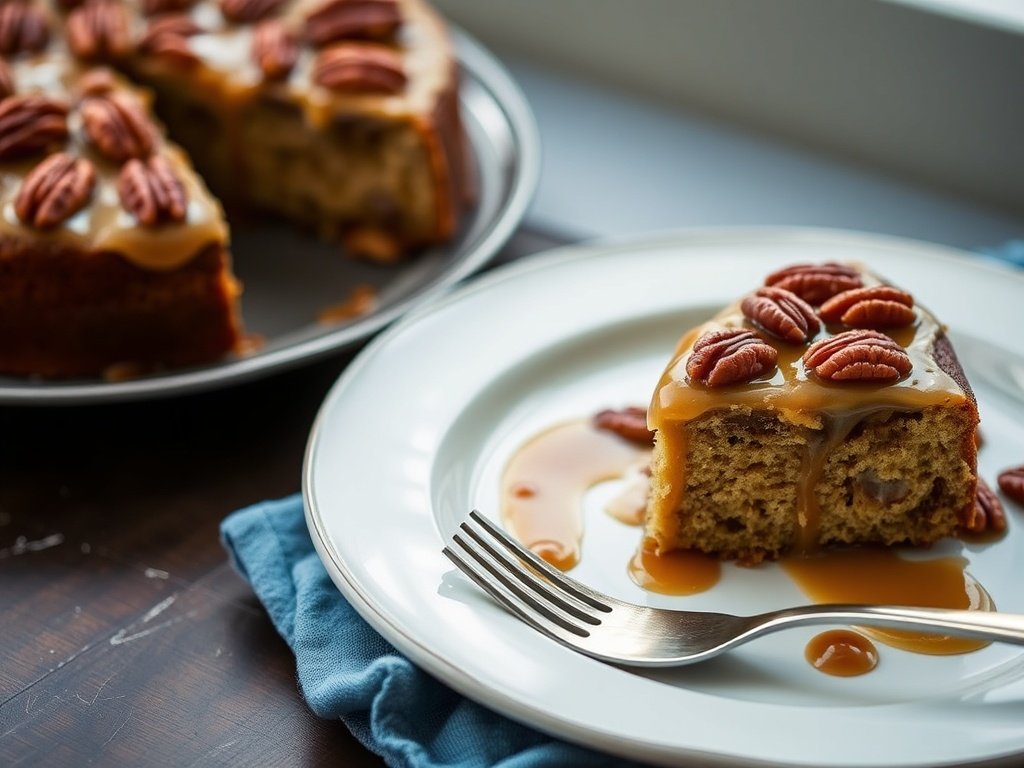
There are some desserts that do more than just satisfy a sweet craving; they transport you to a place of warmth, comfort, and timeless tradition. The Southern Pecan Caramel Cake is precisely one such culinary masterpiece. With its tender, moist cake layers, generously draped in a rich, buttery homemade caramel sauce, and studded with crunchy, aromatic pecans, this cake is the epitome of Southern hospitality and indulgence. Each bite is a symphony of textures and flavors – the soft crumb yielding to the decadent, gooey caramel, followed by the satisfying crunch of toasted pecans – creating an experience that is both deeply comforting and utterly unforgettable.
This isn’t just a cake; it’s a beloved classic, often gracing tables at holidays, family gatherings, and special celebrations throughout the South and beyond. It’s a recipe passed down through generations, cherished for its ability to bring people together and create lasting memories. While the idea of making a multi-layered cake from scratch, complete with homemade caramel, might seem daunting, the joy and immense satisfaction of crafting this masterpiece are truly unparalleled. We invite you to embark on this delightful baking journey, promising a rewarding experience that culminates in a dessert so spectacular, it will undoubtedly become a treasured addition to your own recipe collection.
Prepare to immerse yourself in the art of Southern baking. We’ll guide you through each step, from mixing the perfect batter to simmering a luscious caramel and assembling your stunning creation. The effort is well worth it, for what awaits is a cake that embodies the heart and soul of Southern cuisine: rich, sweet, and made with love. Get ready to experience a taste of timeless tradition that will leave everyone asking for another slice.
Nutritional Information
Per serving (approximate values, based on 16 servings of a 3-layer cake):
- Calories: 625
- Protein: 9g
- Carbohydrates: 85g
- Fat: 30g
- Fiber: 4g
- Sodium: 350mg
Ingredients
Before you begin, ensure all cold ingredients for the cake layers (butter, eggs, buttermilk) are brought to room temperature. This is crucial for achieving a smooth, well-emulsified batter and a tender cake crumb. For the best flavor, use fresh, high-quality pecans and real vanilla extract.
For the Cake Layers:
- All-Purpose Flour: 2 ½ cups (300g), sifted
- Granulated Sugar: 1 ¾ cups (350g)
- Unsalted Butter: 1 cup (226g), softened to room temperature
- Large Eggs: 3, at room temperature
- Buttermilk: 1 cup (240ml), at room temperature
- Baking Powder: 2 teaspoons
- Baking Soda: 1 teaspoon
- Salt: ½ teaspoon
- Pure Vanilla Extract: 2 teaspoons
For the Homemade Caramel Sauce:
- Granulated Sugar: 1 ½ cups (300g)
- Water: ¼ cup (60ml)
- Unsalted Butter: ½ cup (113g), cut into cubes, at room temperature
- Heavy Cream: 1 cup (240ml), warmed slightly (e.g., in microwave for 30 seconds)
- Pure Vanilla Extract: 1 teaspoon
- Salt: ¼ teaspoon (or more to taste, for a salted caramel)
For the Pecan Filling/Topping:
- Pecan Halves or Pieces: 2 cups (200g)
Instructions
A. For the Cake Layers:
- Prepare Pans: Preheat your oven to 350°F (175°C). Grease and flour three 8-inch round cake pans, or line the bottoms with parchment paper and grease the sides.
- Combine Dry Ingredients: In a medium bowl, whisk together the sifted all-purpose flour, baking powder, baking soda, and salt. Set aside.
- Cream Butter and Sugar: In a large bowl with an electric mixer (stand or hand-held), cream together the softened unsalted butter and granulated sugar on medium-high speed until light, fluffy, and pale in color, about 3-5 minutes. Scrape down the sides of the bowl as needed.
- Add Eggs: Add the large eggs one at a time, beating well after each addition until fully incorporated. Beat in the pure vanilla extract.
- Alternate Dry and Wet: With the mixer on low speed, gradually add about one-third of the dry ingredient mixture to the butter mixture, mixing until just combined. Next, pour in half of the buttermilk, mixing until just incorporated. Repeat this process, adding another third of the dry ingredients, then the remaining buttermilk, and finally the last third of the dry ingredients. Mix only until no streaks of flour remain. Be careful not to overmix, as this can lead to a tough cake.
- Divide and Bake: Divide the batter evenly among the three prepared cake pans. Smooth the tops with a spatula.
- Bake: Bake for 22-28 minutes, or until a wooden skewer or toothpick inserted into the center of a cake comes out clean.
- Cool: Let the cakes cool in their pans on a wire rack for 10-15 minutes before inverting them onto the wire rack to cool completely. Ensure they are entirely cool before frosting.
B. For the Homemade Caramel Sauce:
- Prepare Sugar Syrup: In a heavy-bottomed saucepan (at least 3-quart capacity) over medium heat, combine the granulated sugar and water. Stir gently with a heat-proof spatula or wooden spoon until the sugar is dissolved. Once dissolved, stop stirring.
- Cook Sugar: Bring the mixture to a boil. Allow it to boil without stirring, occasionally swirling the pan gently, until the syrup turns a rich amber color. This can take 8-12 minutes. Watch it carefully, as it can go from perfect to burnt quickly.
- Add Butter: Once the desired caramel color is achieved, immediately remove the pan from the heat. Carefully and slowly add the cubed room temperature butter, whisking constantly until it is fully melted and incorporated. The mixture will bubble up vigorously.
- Add Cream: Slowly pour in the warmed heavy cream while continuously whisking. Again, the mixture will bubble up and steam. Continue whisking until the sauce is smooth.
- Season: Stir in the pure vanilla extract and salt.
- Cool: Pour the caramel sauce into a heatproof jar or bowl. Let it cool completely at room temperature, stirring occasionally, until it thickens to a spreadable consistency. This can take several hours, or you can refrigerate it for a shorter period, stirring every 15-20 minutes until desired consistency. If it becomes too thick, you can gently warm it slightly.
C. For the Pecan Filling/Topping:
- Toast Pecans: Spread the pecan halves or pieces in a single layer on a baking sheet. Toast in the preheated 350°F (175°C) oven for 5-7 minutes, or until fragrant and lightly browned. Alternatively, toast in a dry skillet over medium heat for 3-5 minutes, stirring frequently. Let them cool completely.
- Prepare for Filling/Topping: Once cooled, you can roughly chop some of the pecans for the filling/topping, reserving some beautiful halves for garnish if desired.
D. Assembly:
- Level Cakes (Optional): If your cake layers have domed tops, use a serrated knife or cake leveler to carefully level them, creating flat surfaces for easier stacking.
- First Layer: Place one cooled cake layer on your serving plate or cake stand.
- Caramel Layer: Spread a generous amount of the cooled, thickened caramel sauce evenly over the top of the first cake layer.
- Pecan Layer: Sprinkle about one-third of the toasted, chopped pecans over the caramel.
- Repeat: Carefully place the second cake layer on top, pressing down gently. Repeat with another layer of caramel sauce and pecans.
- Top Layer: Place the final cake layer on top.
- Frost and Decorate: Frost the top and sides of the entire cake with the remaining caramel sauce. For a smooth finish, you can heat the caramel slightly to make it more spreadable, then apply it with an offset spatula.
- Final Pecan Garnish: Generously press the remaining toasted pecan halves or chopped pecans around the sides of the cake and arrange some on top for a beautiful presentation.
- Set: Allow the cake to set for at least 30 minutes at room temperature, or chill briefly in the refrigerator, to allow the caramel to firm up slightly before slicing.
Cooking Tips and Variations
Achieving a perfect Southern Pecan Caramel Cake involves a few key techniques and a dash of patience. Here are some expert tips and exciting variations to elevate your baking experience:
- Caramel Caution is Key: Homemade caramel gets extremely hot, reaching temperatures well over 300°F (150°C). Exercise extreme care when making it. Always use a heavy-bottomed saucepan to prevent scorching and ensure even heating. When cooking the sugar, avoid stirring it directly once it starts to dissolve and boil; instead, gently swirl the pan to prevent crystallization, which can make your caramel grainy. Have all your ingredients (especially the butter and warmed cream) measured and ready to add, as the process moves quickly once the sugar is caramelized.
- Pecan Perfection: Never skip toasting your pecans! This simple step intensifies their nutty flavor and enhances their crunch, making a significant difference in the overall taste and texture of your cake. You can toast them in the oven or in a dry skillet on the stovetop until fragrant. Let them cool completely before incorporating them into the cake or using them as a garnish.
- Room Temperature Ingredients Matter: For the cake layers, ensuring your butter, eggs, and buttermilk are at room temperature is non-negotiable. Room temperature ingredients emulsify more easily, creating a smooth, homogenous batter that traps air efficiently. This results in a lighter, more tender cake crumb and prevents a curdled appearance.
- Don’t Overmix the Batter: Once you’ve added the flour mixture, mix only until just combined and no streaks of dry ingredients remain. Overmixing develops gluten, which can lead to a tough, dense cake. A gentle hand is best for a tender, delicate crumb.
- Don’t Overbake the Cakes: Overbaking is the quickest way to dry out a cake. Start checking for doneness at the lower end of the suggested baking time. A wooden skewer or toothpick inserted into the center should come out clean, or with a few moist crumbs attached, but not wet batter.
- Cooling Cakes Completely: Allow your cake layers to cool entirely on a wire rack before attempting to frost them. Frosting warm cakes will cause the caramel to melt, slide, and make a messy situation. Patience here will pay off with a beautifully structured cake.
- Leveling Layers for Presentation: While optional, using a serrated knife or a cake leveler to level the tops of your cooled cake layers creates a much neater, more professional-looking finished cake. Chilling the cake layers briefly (15-20 minutes) in the refrigerator can also make them firmer and easier to handle when leveling and frosting.
- Variation – Salted Caramel: For a delightful twist, increase the salt in your caramel sauce to ½ teaspoon or even ¾ teaspoon for a pronounced salted caramel flavor.
- Variation – Spiced Pecans: Toss your toasted pecans with a pinch of cinnamon or a tiny dash of cayenne pepper for a subtle warmth and complexity.
- Variation – Cream Cheese Frosting: While the traditional recipe uses caramel as the frosting, some variations incorporate a rich cream cheese frosting between the layers, with the caramel drizzled over the top and sides, and pecans as garnish. This adds a tangy counterpoint to the sweetness.
- Variation – Caramel Drizzle: If you prefer a lighter caramel application, you can make a slightly thinner caramel (by adding a splash more warm cream at the end) and simply drizzle it artistically over the top and sides of the cake, allowing the pecan layers to show through more prominently.
Storage and Reheating
Proper storage is essential to maintain the freshness and deliciousness of your Southern Pecan Caramel Cake. Due to its rich caramel and moist cake, it holds up quite well.
Room Temperature: If your kitchen is cool (below 70°F or 21°C), the cake can be stored loosely covered at room temperature for up to 2 days. The caramel will be softer and gooier, which some prefer.
Refrigeration: For longer storage or in warmer climates, store the cake in an airtight container in the refrigerator for up to 5-7 days. The caramel will firm up significantly when chilled.
Freezing: For extended storage, individual slices or the entire unfrosted cake layers can be frozen. Wrap slices tightly in plastic wrap, then aluminum foil, and place in an airtight freezer bag for up to 2-3 months. For unfrosted layers, wrap each layer separately. Thaw in the refrigerator overnight before bringing to room temperature and serving. The caramel sauce can also be frozen separately in an airtight container for up to 3 months; thaw in the refrigerator and gently rewarm over low heat, stirring frequently, to restore its consistency.
Reheating (Optional): If you prefer a warm, gooey caramel experience, individual slices can be gently warmed in the microwave for 15-30 seconds, or until the caramel is slightly softened and warm. Be careful not to overheat, as this can dry out the cake. This is particularly delightful when serving with a scoop of vanilla bean ice cream.
Frequently Asked Questions
What causes homemade caramel to crystallize, and how can I prevent it?
Caramel crystallization occurs when sugar crystals, even microscopic ones, cling to the sides of the pan or get introduced into the boiling sugar syrup. These crystals act as seeds, causing the entire batch to revert to a grainy, sugary texture instead of a smooth caramel. To prevent this, ensure your saucepan is meticulously clean. When dissolving the sugar and water, stir only until the sugar is fully dissolved, then stop stirring completely. If you see sugar crystals forming on the sides of the pan, you can brush them down with a pastry brush dipped in water. Swirling the pan gently is fine, but avoid direct stirring once the boiling begins.
My caramel sauce is too thick/too thin. How can I fix it?
If your caramel sauce is too thick after cooling, gently rewarm it over very low heat on the stovetop, whisking constantly, and add a teaspoon or two of warm heavy cream until it reaches your desired consistency. If it’s too thin, you can return it to a clean saucepan and simmer it gently over low heat, stirring, allowing some of the water to evaporate and thicken it. Be patient and stir constantly to prevent scorching. Alternatively, if it’s only slightly too thin, chilling it longer in the refrigerator can help it firm up.
Can I make this cake ahead of time for a special occasion?
Absolutely! This Southern Pecan Caramel Cake is an excellent make-ahead dessert. You can bake the cake layers up to 2 days in advance, wrap them tightly, and store them at room temperature. The homemade caramel sauce can also be made 3-5 days in advance and stored in an airtight container in the refrigerator. Simply bring the caramel to room temperature or gently rewarm it to a spreadable consistency before assembling. Assembled cakes can be stored in the refrigerator for a day or two before serving, allowing the flavors to meld beautifully.
What kind of pecans should I use, and is toasting them really necessary?
For the best flavor and texture, use fresh, high-quality pecan halves or pieces. Avoid pre-chopped pecans that may be older and less flavorful. And yes, toasting the pecans is absolutely necessary and makes a significant difference! Toasting brings out their natural oils, intensifying their nutty, buttery flavor and giving them a delightful crunch that contrasts wonderfully with the soft cake and gooey caramel. Raw pecans can taste bland and have a softer texture, which would diminish the overall experience of the cake.
